[Author's note: The following post is dedicated to Dishon, who is interested in what happened to England during the Reformation]
 |
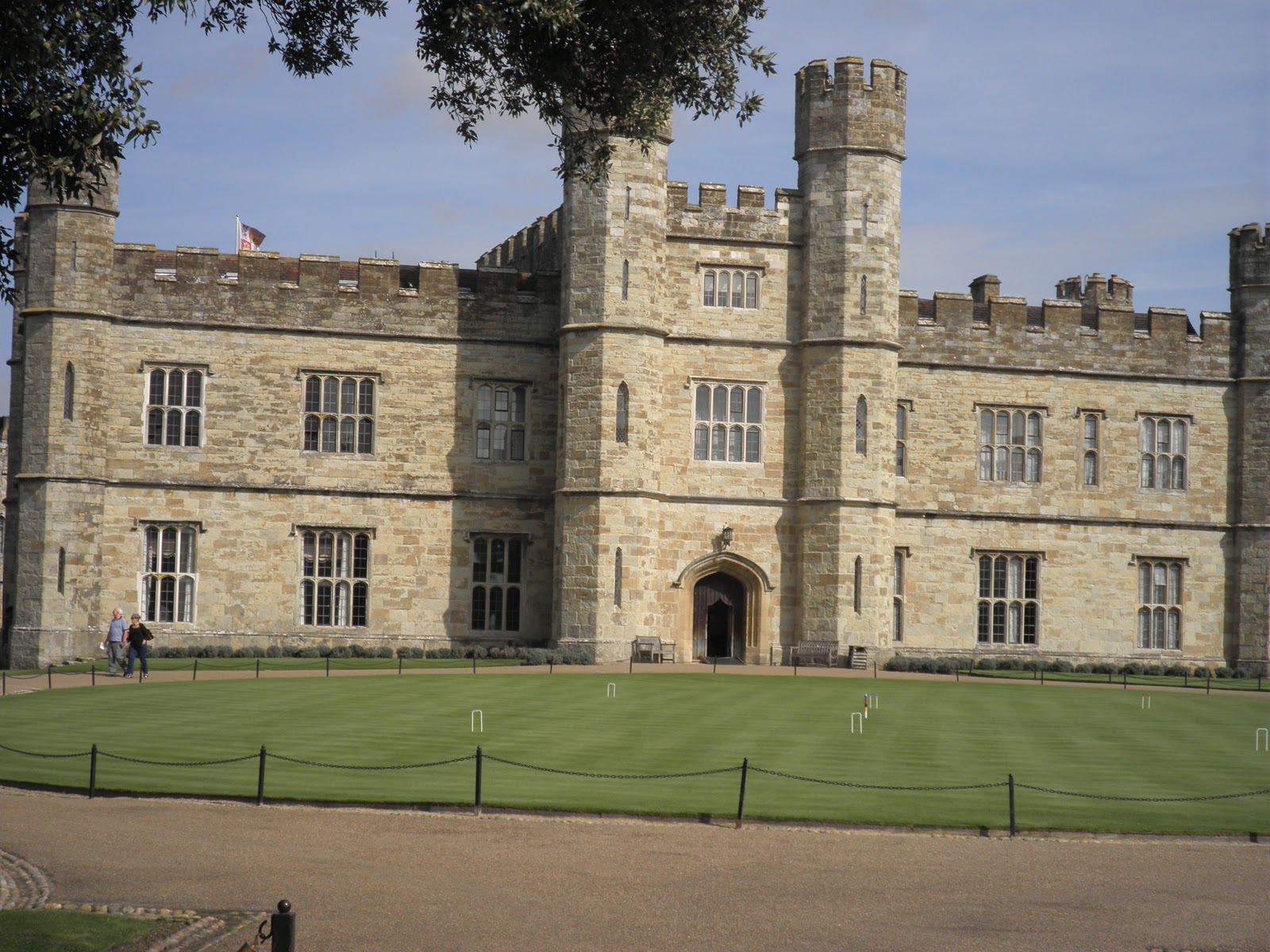
| Leeds Castle, UK, September 2011 |
|
|
Pre-Reformation Britain
Robert Grosseteste
England and Scotland, although not the most powerful countries at those times has a unique relationship with the Reformation. For instance, long before Luther came up with his understanding of justification, there was Robert Grosseteste. Grosseteste was appointed the Bishop of Lincoln in 1235. He believed that clergy should place more importance in preaching than giving Mass, and that preaching should be done in English (so that the commoners would understand), rather than Latin (as all Roman Catholics priests would). He was also famous for speaking against the pope on several issues, including the appointments of non-English speaking clergy in England, and the paying of the crusades.
 |
| The exhumation and burning of Wycliffe's bones. |
John Wycliffe
Then there was also John Wycliffe, who was a preacher in Oxford. During his time, the Roman Catholic church appointed two popes (see my Reformation
post for details). He then began to identify the Bible as the source of spiritual authority (rather than the pope). Having ideas which were contrary to orthodox Roman Catholic beliefs (such as rejecting papal authority), he soon irked the English authorities enough to force him to retire. After retiring, he started a secret project to translate the Latin Bible into English. He passed away in 1384, thankfully before the Roman Catholic Council of Constance deemed him a heretic. They exhumed his body, burned his bones and scattered his ashes.
Yet his legacy lived-- his works would inspire the Czech Jan Hus, and later the Reformer Martin Luther.
Patrick Hamilton
Born in Glasgow, Patrick Hamilton was appointed an abbot and received his education at the University of Paris. Paris was where Hamilton would encounter the works of the Reformer Martin Luther. Returning to Scotland, he began to preach, and soon was tried as a heretic and burned in 1528. Despite his high connections, Hamilton was willing to die for his beliefs (he agreed to be tried knowing the likely consequence). This raised the profile of Protestantism in Scotland, as many commoners wondered why this new theology was that one was so ready to be killed for it.
Thomas Bliney
Educated in Cambridge, Thomas Bliney had a personal struggle with sin, but came an understanding of salvation via faith in Jesus Christ with the passage of
1 Timothy 1:15 of the Erasmus's translation of the New Testament. Just as Erasmus's work inspired the Reformation in Germany with Martin Luther and Switzerland with Ulrich Zwingli, Bliney began to preach against saints and relics veneration, and against pilgrimages to holy places. However, Bliney was no Lutheran-- he upheld the authority of the pope and the sacrifice of Mass. Nevertheless, he was still burned for his views in 1531.
William Tyndale
As Luther's works began to flood into England (despite a ban), a linguist named William Tyndale started translating the Bible into English. Inspired by Erasmus's translation of the New Testament, Tyndale decided to sail for the German town of Worms (where Martin Luther had been tried years ago) to read the Bible in the original Hebrew and Greek. His translation of the New Testament, together with his work,
Parable of the Wicked Mammon (which argued for salvation by faith alone) was smuggled back to England. Followers of the late Wycliffe treated the works as a godsend; the English bishops on the other hand were not so keen.
Tyndale had translated 'do penance' in the Latin Bible as 'repent' in the English, 'charity' as 'love' and 'priest' as 'senior'. What was once viewed as an external sacrament, was now a call for the inward change of the heart. Tyndale had translated a good portion of the Old Testament before the wrath of the Roman Catholics caught up with him. About 16,000 copies of his translations had been smuggled into England. Executed in 1535, his famous last words were "Lord, open the King of England's eyes!".
The Reformation in England-- the monarchs
Henry VIII
The king that Tyndale was talking about was Henry VIII. Ironically, he was the one who kick start the Reformation in England.
 |
| King Henry VIII |
King Henry VIII was a deeply religious king-- he would serve Mass to his priests and attend Mass thrice a day. Passionately Roman Catholic, he opposed the Reformer Martin Luther's view with his work,
A Defense of the Seven Sacraments (written by several ghost writers). For his zeal, the pope award him with the title,
Defender of the Faith. It was highly unlikely that this king would be favourable to the Reformation.
The most potent problem that King Henry VIII was being without a son. He had just went through a war of succession (War of the Roses), and having a son was essential for political stability. His wife, Catherine of Aragon underwent a series of miscarriages, only one baby (Mary I) survived passed infanthood. Interpreting this as punishment for marrying his brother's widow(
Leviticus 20:21), Henry VIII sought to annul his marriage and find a new wife. He sough papal favour (with Pope Clement VII) to do so.
But there were two problems-- firstly, Catherine of Aragon insisited that her marriage with Henry VIII's brother was never consummated, so her marriage with Henry VIII was legitimate. Secondly, Catherine of Aragon's nephew was Emperor Charles V of the Holy Roman Empire. Charles V had sacked Rome once and imprisoned Pope Clement VII. There was no way the pope was going to irk the wrath of Charles V again.
But the king was determined. He assembled an army of scholars to prove that his case was right, and that the pope had no authority over him. They did one better-- they showed that the church in England was planted earlier than the church of Rome, and thus the church of England was independent of the church of Rome.
Armed with this reasoning, King Henry VIII made laws to favour to reflect the increasing independence of the church of England, annulled his marriage with Catherine of Aragon, appointed Thomas Cranmer as Archbishop of Canterbury (the head of the church of England) and married Anne Boleyn. The separation between the churches of England and Rome was complete in 1534, where the English Act of Supremacy declared the King of England, the supreme head of the church of England.
However, his marriage with Anne Boleyn failed to produce a male heir, and rumors that she was having an affair spread. So she was executed and King Henry VIII married Jane Seymour. She was his favourite wife as she bore him his only son (Edward VI). However, she died from complications in childbirth.
Although Henry VIII had a son, he wanted more to secure his succession. With the suggestion of his chief minister Thomas Cromwell (not to be mistaken for Lord Protector Oliver Cromwell; who ruled England a century later), he married Anne of Cleves, but was so repulsed by her that he never consummated the marriage. Cromwell paid with his head, and the marriage was soon annulled.
He then married Catherine Howard, but she was caught being unfaithful, so she was executed. He finally married Catherine Parr, but it was a childless marriage. King Henry VIII died, leaving Edward VI to succeed him.
 |
| Summary of Henry VIII's marriages |
One thing to be noted is that King Henry was no Protestant (despite his break with the Roman Catholic Church). Although he had appointed a Protestant Archbishop (Thomas Cranmer), a Protestant Chief Minister (Thomas Cromwell), and married Protestant wifes (only Catherine of Aragon and Catherine Howard were Roman Catholic), all King Henry VIII was interested in was to deny the pope's supremacy in England. In other words, he did not want a Roman Catholic England or a Protestant England, he wanted an
English Catholic England (the difficulty is deciding what was Roman to be rid of, and what was Catholic to be retained). For instance, in a single day he burned three Protestants for heresy and hanged three Roman Catholics for treason.
Nevertheless, he appointed Protestants in key positions (who pushed their Protestant agendas). Egged on by Thomas Cromwell, he stripped the Roman Catholics monasteries of their land (which he sold for funds).
Furthermore, having used the Bible for his case for his first annulment, it was hard for the king to limit the authority of Scripture. He decreed that every church should have at least one Bible. Soon private Bible-reading became a popular hobby (even the illiterate started to learn how to read, to be in touch with the Word of God), and common folk started challenging priests on their theological ideas. Although King Henry VIII was not really Protestant, he had unleashed the Reformation in England.
Edward VI
In 1547, Edward VI was nine, and succeeded his father as king. Due to his youth, his uncle, Edward Seymour ruled in his stead as Lord Protector. Seymour and the Archbishop Thomas Cranmer worked to acclimatised England to the Reformation. Only preaching in English was allowed, images of saints were removed from churches and chantries were dissolved (as they encouraged praying for people in purgatory).
 |
| King Edward VI |
The Reformists in the English government were adamant is ensuring that the move from Roman Catholic theology was a slow reform, rather than rapid revolution. For instance, the 1549 English Book of Common Prayer procedure for Mass included the words "The Body of Our Lord Jesus Christ, which was given to thee, preserve thy body and soul unto everlasting life". Both Reformists and Catholics could attend Mass with clear conscience.
However, Edward VI died at the age of 15 in 1553. John Dudley, who had succeeded Edward Seymour as Lord Protector panicked-- he knew the person in line was the strongly Catholic Mary (Edward VI's half-sister). He appointed Lady Jane Grey (Mary's cousin) to be the next queen, but to no avail. The people were more interested in the monarchy than religion. Mary gained support and dispatched Lady Grey to be executed. The Protestants supported Mary, unaware of how harshly she would treat them.
Mary I
Daughter of Catherine of Aragon (Henry VIII's first wife), Mary had been declared illegitimate when her father broke with the church of Rome. To Queen Mary, the Reformation was not only promoting a heresy, but the source of all her troubles.
Swiftly, Queen Mary instilled Roman Catholic policies. Cardinal Pole replaced Thomas Crammer as Archbishop of Cantebury. Married clegry were separated from their wives. Bibles were removed from churches. At first, the English people generally happy to accomodate.
To wipe out twenty years of history was going to difficult. For one, forcing landowners to return their land to the monastrieswas unpopular. Secondly, the people had already read the Bible, so they had doubts about Roman Catholic teachings. Thirdly, her choice of potential spouse was the future King Phillip II of Spain, a traditional enemy of the English.
Mary's policies soon became brutal-- she burnt popular Protestant preachers and figures like Hugh Latimer (Bishop of Worcester), Nicholas Ridley (Bishop of London) and Thomas Cranmer (ex-Archbishop of Cantebury). Watching the brave martyrs die had the undesired effect for Mary-- the populace were moved by the courage of the martyrs (although Cranmer renounced Protestantism initially under torture, he took back back renouncement before his execution). Hundreds of Protestants were killed during Bloody Mary's reign.
Mary passed away from stomach cancer in 1558, without an heir, allowing her sister, Elizabeth to take the throne.
Elizabeth I
The famed Queen Elizabeth I regarded her reign as God's work-- after all, she survived Bloody Mary's policies. And Elizabeth I had to be Protestant-- her mother was the reason why the England broke from Rome, and Rome did not recognise Elizabeth I's reign as legitimate.
Knowing there were many different Protestant factions in England, as the head of the Church of England, she kept to a very
English Protestantism. She wanted England to be a united, moderate Protestant nation. Everyone had to go church, whether they agreed with the theology behind it or not. Catholics did not need to take Communion if they did not want to, but just had to attend church. Elizabeth was concerned that foreign Catholic nations might invade if she was too Protestant.
Not that it helped-- in 1570, the Pope encouraged English Roman Catholics to rise up against their Queen. Now being a Catholic was dangerous-- Elizabeth I had tolerated them, now they were seen as traitors. The Catholics of Europe saw England as a sole Protestant nation to be brought down-- if England fell, the spirit of the Reformation would die.
The Catholic's hope was in Elizabeth I's Catholic cousin, Mary, Queen of Scots. If Elizabeth was assassinated, she would be the next queen. But this Mary was neither popular in Scotland, nor with Elizabeth I. Under arrest in England, Mary was soon suspected of treason and executed. Mary's son, James was being brought up by Protestants. The English Protestant line seemed secured, even if Elizabeth remained virgin (and hence childless).
In 1588, the Catholics had enough. Under the pretext of making England Catholic, King Philip II lauched the Spanish Armada against England. With the help of bad weather, the English navy defeated Spain. Elizabeth I saw this as God's blessing on a Protestant nation. She continued her Protestant moderation.
The old Roman Catholic ways slowly died out in England-- the only Bible the people knew was English, the only church they attended was Protestant and the only Protestant theology was taught. This secured Protestantism in England.
The Reformation in Scotland-- the people
John Knox
While King Henry VIII of England was having marriage problems with the Roman Catholic Church, King James V of Scotland had no problems with Rome. He was already the head of the Church of Scotland, and there was no benefit for James V to break with Rome.
 |
| John Knox |
In 1542, James V passed away, and Mary, Queen of Scots was next in line. However, she was still an infant, and James Hamilton, the Earl of Arran was her regent. James Hamilton was famous for flipflopping between Protestantism and Catholicism.
In 1543, James Hamilton favoured the Protestants. Bibles were sold and Protestant preachers were appointed to church positions. He even had Cardinal David Beaton of St Andrews arrested.
In 1544, James Hamilton favoured the Catholics. Reading the Bible (in the vernacular) was illegal again, and the leading Protestant preacher, George Wishart was burned as a heretic. Upset, the Scottish Protestants marched up to St Andrews castle and murdered Cardinal Beaton in 1546. French troops (under Scottish permission) marched up to St Andrews castle and defeated the Protestants. Wishart's ex-bodyguard, John Knox was among the defenders.
Condemned to be slaves on board French ships, Knox and his defenders caused problems for his captors. Knox refused to respect the Catholic Mass and tossed an image of the Virgin Mary overboard. In 1549 he was released (under unclear circumstances).
Taking refuge in England, Knox tried to persuade Thomas Cranmer to speed up the Reformation in England. When Bloody Mary took over, he left for Geneva. Coming into the city that hosted the Reformist John Calvin, John Knox thought Geneva to be a paradise. In 1558, he penned
The First Blast of the Trumpet Against the Monstrous Regiment of Women. To Knox, the horrors unleashed on both England and Scotland were due to the reigns of both Blood Mary and Mary, Queen of Scots. It was poorly timed, as Mary I's reign was short. No way would Queen Elizabeth allow Knox to return after writing such a sexist book.
Nevertheless, Knox returned to Scotland in 1559. There, his sermons stroke up passions of Protestantism. Despite being declared an outlaw, Catholicism was beginning to be seen as something foreign. After all, Mary, Queen of Scots was living in France, married a French and was brought up in France. Soon Protestantism was fused with Scottish nationalism, and the French were driven out of Scotland (with the help of the English; Queen Elizabeth I would rather have a Protestant Scotland than a Catholic one).
In 1560, the Scotish Parliment declared that the pope no longer had any authority in Scotland, and a new confession of faith (the Scots Confession) was drawn up by John Knox. Mary, Queen of Scots, returned to Scotland the next year, but she had to accept a Protestant Scotland, whether she liked it or not.
Conclusion
What a turn of events! In 1558, both England and Scotland were Catholic, but both became Protestant in 1560. Yet the story of the Reformation in both these kingdoms were different. For one, the Reformation in England was monarchy-driven, while the Reformation in Scotland were people driven.
Now when comparing the stories of the Reformation in England, Scotland, Wittenburg (led by Luther), Geneva (led by Calvin) and Zurich (led by Zwingli), I am quite surprised by how different the events were. While it is possible to use the Reformation for political purposes (as in England), the Reformation can also occur without political support (as in Zurich and Geneva).
What this showed that the Reformation was not moral, social or political reform dressed up in theological clothing, but that a theological revolution laid underneath everything. As a project to keep living the gospel, we should not belittle the fact that theology may drive history.
For further reading
Reeves, M. (2009) The Unquenchable Flame
Ryle, J.C. (1960) Five English Reformers
Recommended websites
Theology Network