Tuesday, February 20, 2007

Captain America/ Ironman: Casualties of War (Arts)


I hate it everytime Defensedefumer forces me to review comics. Afterall, ALL my book reviews are comics! So it was natural that I was particularly reluctant to read this one.
The story takes place halfway through Marvel's biggest event of the year so far: Civil War. If you are in the dark so far, basically the American government had required all metahumans to register with the state. Feeling that it oppresses human rights, Captain America leads a team to oppose the law. Ironman, on the other hand, is on the side of the government.
So the book begins with Ironman, aka Tony Stark, waiting patiently for Captain America, aka Steve Rogers, to appear. It is soon revealed that the two had been meeting frequently to resolve their problems diplomatically. To summarise, the comic is full of dialougue, with an unexpected sparring match in the end.
It may sound boring, but I would not be lying if I said this is the best comic I ever read so far! This comic clearly summarises the events of Civil War. For one, it states the main beliefs of both sides. Tony is focused on accountability, while Steve is more concerned about personal liberty. In the end, both sides are unable to persuade the other to change his stand.
A great deal of history is also brought up in the story, such as the Armour Wars, the death of Gwen Stacy and the Kree-Skrull War. Then it gets personal; Ironman accuses Steve of misusing his iconic image for his own interests and oversimplifying morality, while Captain America labels Tony as a government stooge and betraying Spiderman.
The story is aptly named "Rubicon", as the two sides leave, knowing that they will never see each other in the same light ever again.
In conclusion, this comic is a must-buy! Although the fight scene was a little irrelevant in the end, it is a generally good story with fantastic plot development.
Overall: 98/100
Nurlisa

Monday, February 19, 2007

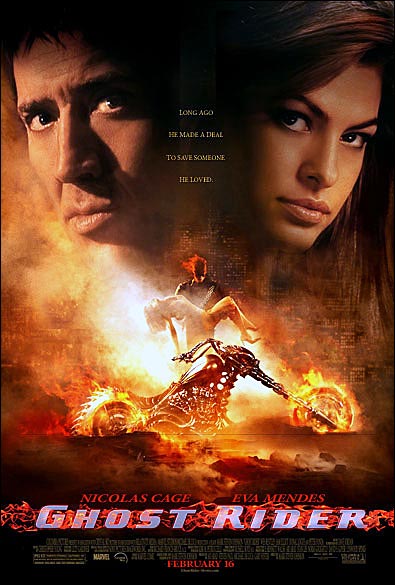
Ghost Rider Review (Entertainment)

Superhero films are getting bigger and more frequent, but unfortunately not neccessary better. Afterall, we seen few movies of this genre that are actually worth watching (Spiderman, Batman Begins), but many that are terrible (X-Men 3, Hulk, Catwoman, Elektra). This film falls in latter level.

The movie starts of with Johnny Blaze (Nicolas Cage) selling his soul to a demon called Mephisto in exhange for his father's health. Even though Mephisto basically shortchanges him, Blaze has to serve Mephisto as a bounty hunter, or a "Rider".

While the story features great graphics and funny one-liners, the plot was hair-thin and felt disconnected at times. This was particularly disappointing as it had the potential to do well. For instance, the fight between Ghost Rider and Blackheart's lackeys felt rushed and uncompleted. Eva Mendes's character Roxanne Simpson had as much depth being Blaze's ex-girlfriend as a teaspoon.

In conclusion, like many action films nowadays, Ghost Rider features fantastic visuals, but poor storylines.

Overall: 39/100

Torch;d

Patriotism: Valueless? (Philosophy)

Patriotism is not "cool". That's the message driven into the minds of our youths today.

I recently met a teacher who complained that her upper secondary students did not know the meaning of "patriotism". It seems as if it is an outdated belief, applicable only in the horrors of the World Wars, or the revolutions of the Cold War. Afterall, all those who love their country are brain-washed, government stooges, right?

However, that is a misinterpretation. Patriotism is not love for the government, but rather, love for the nation. Currently, it is widely believed that it is cool to oppose authority. Think DX in WWE, or Prison Break. Those who value the individual's rights over the country are deep thinkers, and usually right. Please take a step back and think about it -- not all patriots work for the government. Think Nelson Mandela -- he suffered as a convict because he believed hs country could be cured of racism!

Another important think to note is that we must have a reason to love the nation. In other words, this love is conditional. It is not uncommon to hear statements such as "I love Singapore because it is a safe country", "Australia is the best place due to it's cool weather" and "I ashamed to be French as they did not win the World Cup". Whatever happened to unconditional love? Everyone seems to expect something in order to love it. As Zubir Said, the man behind Singapore's National Anthem, once said (ignore the pun), "We should uphold the land we live on."

What I am saying here, is that each of us should be responsible to the country. Although it may look as if it is limiting patriotism to a single, untangible principle, we have to recognise it for what it is -- an ideal. Those who believe in it are not brain-washed stooges, but instead mature, and convicted individuals.

The 198

Wednesday, January 31, 2007

Sidney Sheldon Dies At 89 (Arts)

On 30th January 2007, American author Sidney Sheldon passed away. Famed for his mystery and suspense books, he died at the age of 89 due to pneumonia.

Personally, I find it a great loss to literature. He was such a great and entertaining writer. He had a tendancy to promote female characters and involve politics, romance and revenge in his novels. The only real qualm I have is that he would protray all males as sex-hungry.

Nurlisa

Tuesday, January 30, 2007

Punisher: A Maniac? (Philosophy)

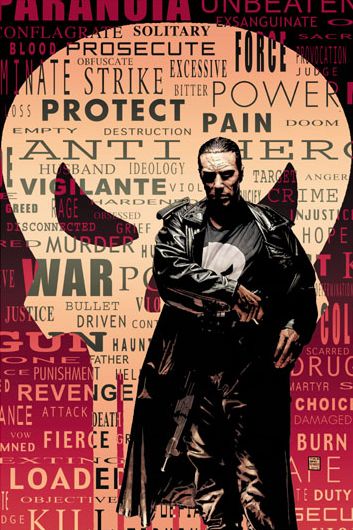
In case you don't know yet, the Punisher a.k.a. Frank Castle is a Marvel Comics vigilant who believes in killing criminals. He is not above torturing, exhorting or blackmailing either. Sincerely believing that all criminal scum deserves to die, he sets out on a one man war against crime.

The question is, in this day and age, are we condemning these ideas too quickly? When the police is incompentant, and the law inadequent, is it right to take justice into our own hands? Can we ever justify killing?

The 198

Sunday, January 07, 2007

Elitism: The Lesser Evil? (Philosophy)

Reading Defensedefumer's blog recently, I just felt I had to write this article.

Now, on 26th October 2006, a particular Wu Shu Min wrote that Singapore is divided into to the "capable and clever" class and "sadder" class. She tells whiner Derek Wee to get over his "miserable" life and get out of her "elite, uncaring" face. To top it all of, her minister father did not apologise for her views. This leads us to a question, is elitism a necessary evil?

Now, hold on and think for a second. Most of you will be quick to condemn Shu Min to the depths of hell. However, if you really ponder, there are grains of truth in her words. It's just that she was very curt in her statements.

Our government system may be one to run on meritocracy, but often, elitism occurs. Instead of seeing everyone who works hard benefit, we see that the best benefits. Think about how only the top schools make the papers, or that only the winners are really rewarded in competitions. The best are usually the ones who care enough to give thier best, to clear the mess, or to run a country. You may complain all you want, but elitism is a neccessary evil if you want the most efficient way of doing things.

Let's face it, life is never fair. If it were, all of us would be born in the same background. Think about it; if you want to keep the best in your state, country or company, you have to continually reward him over and over again. It will be that way, and continue to do so.

Why choose the alternative when you have the best?

Ben Tan

Thursday, January 04, 2007

Bullet Points #1 Review (Arts)


I hate comics. I really do. Despite New Avengers #25 putting doubt in my opinion, this comic reinforces it.

Let's start with this story. The origin of the plot is derived from the idea that a single bullet can change the course of history. It highlights World War One and the deaths of Martin Luther King and John Kennedy as examples. Fine, I'm ok with that and partially excited on the potential. Then it shows how the premature death of Doctor Erskine changes the Marvel Universe.

For the uninformed, the good doctor was the one who developed the super-soldier formula that led to creation of Captain America. As Erskine was assasinated by Nazi agents in 1940, Steve Rogers fails to be the new American hero. By the way, young Ben Parker (Peter Parker's uncle) was one of the guards killed in the assasination. Ok, everything is fine so far.

Then the lousy part comes in! It states that World War Two starts when Japan bombed Pearl Habor! Every Tom, Dick and Harry knows that the war started 2 years earlier when Germany invaded Poland! Steve Rogers is then asked to be part of the Iron Man project, without any explanation on how USA could be so advanced and yet get its butt kicked in Asia.

It could only get worse. Peter Parker, without Uncle Ben as a moral guide, becomes a wild kid. See the link? I certainly don't. Anyway, he jacks a car and arrives at a bomb testing site. He is soon turned into the Hulk by the Gamma bomb. No shit!

This premise has lots of potential, but falls short in almost every area. If there is a saving grace, it's that Steve Rogers is still protrayed the ever idealistic American. He is probably the only mainstream character not to break character.

Overall: 21/100

Nurlisa