Showing posts with label war. Show all posts

Wednesday, March 25, 2026

Theology 1.0: Who is Karl Barth?


Karl Barth was a Swiss Reformed theologian widely regarded as one of the most influential Protestant thinkers of the 20th century. His work was a seen as a rejection to the liberal Protestantism of the 19th century (which blended faith with modern culture, philosophy, and human experience) and a return to the centrality of divine revelation in Jesus Christ.

Opposition to World War 1 and 2

During World War 1, Barth was horrified when many of his liberal professors signed a manifesto supporting Germany's war efforts, exposing what he saw as theology's dangerous captivity to culture and nationalism. In response, he wrote his explosive Commentary on the Epistle to the Romans (1919) where he insisted that true knowledge of God comes only through God's self-revelation, not human reason or experience. This rebuked attempts to subordinate theology to culture and politics.

He further expounded his thoughts in his book Church Dogmatics (1932). 

Just before World War 2, he became the primary author of the Barmen Declaration (1934), a foundational confession for the anti-Nazi Confessing Church. It rejected any “German Christian” movement that subordinated the gospel to Hitler, the state, or race, declaring: “Jesus Christ, as he is attested for us in Holy Scripture, is the one Word of God.” This document reminded the church that its first loyalty is always to Christ, not to any earthly power, ideology, or “spirit of the age.”

Differences with Reformation

Although Barth was off the Reform tradition, he was definitely not a classical Protestant. (He is often called a neo-orthodox thinker.)

For instance, he did not accept the inerrancy of Scripture. The Reformers (Luther and Calvin) viewed the Bible itself as the inspired, authoritative Word of God—generally inerrant in its original sense.

Barth distinguished sharply: Jesus Christ is the one true Word of God; the Bible is a human witness that becomes the Word of God when God sovereignly speaks through it. This makes Scripture dynamic and event-based rather than statically infallible.

In another instance, Barth was absolutist about nature. He rejected any “point of contact” in fallen human nature or creation for knowing God—insisting on revelation alone can lead us to the knowledge of God. This is in contrast to the Reformers who felt that natural theology can lead us to some (albeit distorted) knowledge of God.

Legacy

Today, Barth is remembered for centering Christianity. Barth revitalized 20th-century theology by making it more biblically serious and Christ-centered at a time when liberalism had diluted the faith.

Saturday, June 15, 2024

Theology 1.0: How did Christianity come to Myanmar?


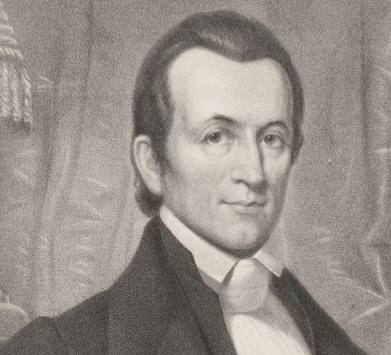
Adoniram Judson was a missionary in Myanmar for almost 40 years

Myanmar (Burma) is a historically resistant to Christianity. It has banned most Christian mission work and religious material since independence in 1948, and burning of churches is reported in the southern regions.

Yet the number of Christians has grown (especially among the minority races) from 6% in 2016 to 8% to in 2023. Of this 8%, two-thirds are from the Baptist denominations. This is due to the efforts of Adoniram Judson.

Adoniram Judson
Although the Portuguese had made occupied parts of Myanmar during the early 1600s, their mission work stopped in 1613 after they were repelled by the Burmese.

In 1813, Americans Adoniram Judson and his wife Ann arrived in Burma after the British did not want them preaching to Hindus in British-controlled India. Despite suffering a miscarriage and the death of their two-week old child along the way, both Adoniram and Ann dedicated their time to studying Burmese and their culture. In 1817 he translated the Gospel of Matthew to Burmese.

Isolated from European or American help, Adoniram finally held his first public service in 1818, and had his first convert less than a year later. Although he unsuccessfully petitioned the Burmese king Bagyidaw to remove death sentences for Burmese who converted from Buddhism to Christianity, the Judsons managed to gain 18 converts by 1823. Adonriam also made his first Burmese translation of the New Testament.

Anglo-Burmese war
In 1824, the British Empire warred with the Burma. Despite not being British, Adoniram was jailed for being a Westerner.

Ann visits an imprisoned Adoniram
As the war went poorly for the Burmese, Adoniram was recruited by Burma to act as a negotiator and translator. He was freed when the war ended in 1826. That same year, Ann passed away and their third child passed away in 1827.

With the minorities
In 1827, Adoniram made contact with the Karen people. Unlike the majority Burmese population, they were not Buddhist but animistic, and were oppressed. He surprisingly found them receptive to Christianity, and focused his efforts to the Northern Karen tribes.

He finally translated the entire Bible to Burmese in 1834. He married Sarah Hall Boardman in the same year. They continued the minister in Burma until 1845. Sarah had fallen ill and was recommended to return to America. She died en route the same year.

Adoniram married a third time to Emily Chubbuck in 1846. Adoniram and Emily both travelled to Burma to continue the mission work there. 

In 1850, Adoniram fell ill and was recommended a sea voyage. He died the same year at the Bay of Bengal. By this time, Burma had about 100 churches and 8000 converts.

Today, Myanmar has the third largest number of Baptists worldwide, behind the United States and India.

Monday, March 04, 2024

Theology 1.0: What did Pope Leo I tell Attila the Hun?


The Huns, as depicted in the game, Total War: Attila

From the year 430s to 450s, Europe was terrorized by nomadic barbarians known as the Huns. During this period of time, Rome split into two - the Western and Eastern Roman Empire. Rome was at its lowest state. The Eastern Roman Empire was richer and controlled the Mediterranean, but faced the powerful Sassanid Empire from Persia. Western Rome stretched from Spain to Italy and Tunisia, but could barely hold on.

Attila led the Huns to extracted tribute (protection money) from both Roman Empires after raiding and sacking their cities. At Attila's peak, he received 700 kg of gold per year from Eastern Rome.

In 450, Attila renewed his campaign against Western Rome. However in 451, Attila suffered massive losses at the Battle of the Catalaunian Plains (Northeast France). Undeterred, he launched an invasion of Italy and pushed his way toward Rome, sacking the city of Aquileia in the process. His forces stopped at the River Po in 452.

The meeting with Pope Leo I
With the Western Roman Emperor's blessing, three envoys were sent to negotiate peace with Attila. Gennadius Avienus, Memmius Aemilius Trygetius (both civilian officers), and Pope Leo I. While there are no records of what was discussed, Attila agreed to remove his forces from Italy peacefully. No gold was exchanged and no betrothal was offered.

The Meeting of Leo the Great and Attila by Raphael. Painting was done between 1513 and 1514.


So why did Attila retreat?
While Attila was rumored to have shown deference and mercy to Christian bishops like Lupus of Troyes, this meeting with Pope Leo I was well-recorded to have happen. Yet there are different ideas of Attila's sudden withdrawal.

Prosper of Aquitaine, a Christian historian mentioned that Attila was so impressed by the pope that he withdrew.

Priscus, an Eastern Roman diplomat wrote that Attila was superstitious and learned that another barbarian leader, Alaric of the Visigoths died one year after sacking Rome in 410.

Hydatius, a Western Roman chronicler was a bit more pragmatic in his interpretation. He remarked that the Huns was worn down by plague and starvation (there was a famine in Italy at that time). Thus Attila knew he had little reward in taking Rome. This seems to be the current favored theory as it has been reasoned that Attila was not a Christian and previously respected strength and gold.

What does this mean for a Christian?
No doubt there was probably some level of fear for Pope Leo I and his companions. After all, Priscus wrote (of Attila),

He was a man born into the world to shake the nations, the scourge of all lands, who in a way frightened all mankind by the terrible rumours that were spread about him.

In the Christian view, there are two types of fear. One is the fear of God which is to have reverence and respect for Gods nature and power. This fear is beneficial.

The fear of the Lord is the beginning of wisdom;
    all those who practice it have a good understanding.
    His praise endures forever! - Psalms 111:10

Yet we know that there is a type of fear that hinders us Christians from doing God's work.

For this reason I remind you to fan into flame the gift of God, which is in you through the laying on of my hands, for God gave us a spirit not of fear but of power and love and self-control. - 2 Timothy 1:6-7

While many of us will never be called to negotiate with a foreign aggressor or terrorist, we have experienced this type of fear before. Now I do not know if Pope Leo was thinking the same thing, but I do know that my worst and most fearful days are never as bad because I trust God.

In God, whose word I praise,
    in the Lord, whose word I praise,
in God I trust; I shall not be afraid.
    What can man do to me? - Psalms 56:10 -11

Scary our problems are, ultimately God is with us as long as we trust and love Him. 

For more reading:

The Roman Catholic view of the incident

Monday, October 09, 2023

Alternative Culture: 2023 Gaza-Israel War and the responses of Christian organisations

Rockets fired from Gaza, photograph taken 7 October

Recently, Israel experienced wide-scale attacks from the neighbouring territory of Gaza. Led by the Islamic Palestinian organisation Hamas, the attackers launched operations over land, sea and air. As of 8 October 2023, about 600 Israelis have been killed and thousands wounded.

In response, Israel described this as a "war", and bombed Gaza after warning of a revenge strike,. This retaliation killed abut 370 people.

In this post, I want to briefly summarised how Christian organisations have responded in this crisis.

Responses from Christians
As with any wars, there is a tendency to be partitioned in the support. Certain Christian organisations, like Christianity Today is explicit in its support for Israel. This is unsurprising as there are calls by Muslim leaders to support Hamas based on religious brotherhood alone.

Nevertheless, majority of the Christians I see are praying for a quick end to the bloodshed, with most condemning the killing of innocents. Both the Pope and the Latin Patriarch of Jersualem (Roman Catholic leader of Jerusalem) called for descalation. The Patriarch's official statement is here.

The Archbishops of York and Canterbury have called for restraint and a quick path to peace. The Lutheran World Federation also called for international efforts for a swift ceasefire.

Despite differing attitudes with regards to the methods of peace, it is obvious that we should desire a peaceful outcome. As Jesus said,

Blessed are the merciful,
    for they will be shown mercy.
 Blessed are the pure in heart,
    for they will see God.
 Blessed are the peacemakers,
    for they will be called children of God.
  -- Matthew 5: 7-9

Tuesday, April 12, 2022

With Due Respect: Christianity has not stopped violence


Screenshot from Attila Total War

"Put your sword back in its place," Jesus said to him, "for all who draw the sword will die by the sword."
-- Matthew 26:52

One of the new criticism I heard of Christianity is that it has not stopped violence. This is especially prominent during the 2022 Russian invasion of Ukraine. After all, both Russians and Ukrainians are mainly Eastern Orthodox Christians, and the Russian Church has endorsed the invasion.

However, this is myopic political and philosophical position. Just because one major church supports the war, it does not mean that Christianity as a whole has never stopped violence. We would not apply the same standards elsewhere. For instance, just because the Imperial Japanese of the 1940s were Buddhist, it does not mean all Buddhism is violent.


Furthermore, prominent church individuals have condemned the invasion of Ukraine. The former Archbishop of Canterbury (Head of the Anglican Church) condemned both Russian Premier Putin and the Russian Church for their actions. The Anglican Church has offered to open discussion with the Russian church with regards to peace.

Let me go back further and show some examples on how the Church as a system attempted to reduce violence in the world.

A) Papal mediation between Chile and Argentina
While I am not a Roman Catholic, I have to recognize the times when Roman Catholic Church has stepped up. In 1983, the Pope mediated a potential conflict between Chile and Argentina (both countries are majority Roman Catholic) and both countries renounced the use of force.

B) Just War theory (Thomas Aquinas)
In Medieval Europe when most nations claimed to be Christian, there were academic attempts to restrict violence. By giving clear criteria, nation states would need to meet a certain standard when waging war. 

Thomas Aquinas distilled a Just War to three conditions: the authority of the sovereign, the purpose of the war must be just, and finally the conduct and intent of the involved warriors 

C) Inquisition
Unlike popular portrayals on how violent the Inquisition (a church judicial system to root out heresy), the Inquisition was an attempt to reduce violent and rampant accusations of heresy.

In fact the Inquisition is considered to be the first attempt at a universal court system, where evidence is needed for a guilty verdict, and biased testimonies were dismissed. Some historians have even argued that the Inquisition laid the foundation for the modern legal systems of Europe. As a Singaporean, it is interesting to note that Singapore law is based on English Common Law which has parts of its origin in the Inquisition.

Conclusion
While one can claim that the culture of Christianity has led to violence, one must also acknowledge the efforts the church took towards towards peace.

HMS Hermes in flames, 1943

For more reading:
God's Philosophers (2009)

Tuesday, March 01, 2022

Alternative Culture: 2022 invasion of Ukraine


Ix Shen, a Singaporean who chose to stay in Ukraine to support his Ukrainian wife

On 24 February 2022, Russia launched an invasion into Ukraine. In this post, I will write about the actions of some Christians involved in the crisis.

State churches
Unlike Western and Asian nations, religion and state politics are not separate. Thus the Orthodox Churches in both Russia and Ukraine support their state.

This is evident as the Patriarch of the Russian Orthodox Church, Patriarch Kirill, once called the Russian premier, Vladimir Putin, a "miracle of God." He also called on the Russian Orthodox Christians in Russia, Ukraine and Belarus to side with Russia and defend their "historic homeland".

On the flip side, the Ukraine Orthodox Church has called on the international community to defend Ukraine. On Twitter, Metropolitan Epiphanius I, the Church’s primate called on people to pray "for Ukraine, for victory, for our soldiers."

Other church leaders
Some church leaders in the Ukraine had chose to remain in the country to provide humantarian aid.

Vasyl Ostryi, pastor at Irpin’ Bible Church, wrote that he and his family (that includes 4 daughters) decided to provide medical and spiritual support, instead of evacuating. He stated, "if the church is not relevant at a time of crisis, then it is not relevant in a time of peace".

Northern Ireland missionaries, Timothy and Rhonda Sloan decided to stay in Ukraine to provide shelter to the needy. Timothy stated, "Rhoda and I are not leaving - how can we? As an elder in the Church, my responsibility is to shepherd at all times."


Conclusion

Let us pray that the conflict in Ukraine quickly reaches a peaceful resolution.

“I have told you these things, so that in me you may have peace. In this world you will have trouble. But take heart! I have overcome the world.” - Jesus (John 16:33)

If you are Singaporean, and wish to help, you may find more information about the Red Cross here.