Showing posts with label evangelism. Show all posts

Monday, October 21, 2024

Alternative Culture: The Pope's Speech in Singapore


In September 2024, Pope Francis visited Singapore as part of his tour of Asia. He gave a speech about the importance of inter-faith relations at the Catholic school, Catholic Junior College. The transcript of the speech is here

As usual I will give a theological take on current events, also for this speech in this post.

The good
"A young person must be a critical thinker, and it is not good never to be critical."

"Do you have the courage to criticize but also the courage to let others criticize you?"

"Young people must have the courage to build, to move forward and go out of their “comfort zones.”

The Pope advocated for critical thinking, and that is always good. Too often we Asians tend to have overly fear authority. We rather go through the motion pretending a fallacy is correct then to questions the legitimacy of a claim and risk upsetting the harmony of a team project, or upsetting the boss.

Jesus said to him, “I am the way, and the truth, and the life. No one comes to the Father except through me. - John 14:6

This applies doubly for Christians. As Jesus claimed to be the truth, Christians should not be afraid to examine any claim or study any research with a critical and sceptical mind in order to find truth.

Although the pope's speech started out well, it went downhill from there.

An inter-religious gathering in Singapore, 2017

The bad (wasted opportunity)
"If you start arguing, “My religion is more important than yours...,” or “Mine is the true one, yours is not true....,” where does this lead? Somebody answer. [A young person answers, “Destruction”.] That is correct."

"All religions are paths to God. I will use an analogy, they are like different languages that express the divine. But God is for everyone, and therefore, we are all God’s children. “But my God is more important than yours!”. Is this true? There is only one God, and religions are like languages, paths to reach God. Some Sikh, some Muslim, some Hindu, some Christian. Understood? Yet, interfaith dialogue among young people takes courage."

Instead of advocating for the exclusivity of Christianity, Pope Francis chose the safer, political path. He claimed that religions are pathways to the same God, and that arguing a single, right path is "destructive". 

To me, this was a great wasted opportunity. The pope had a stage to preach Christ to a multicultural Singapore, and threw it away. It is not like this platform was unprecedented; the Apostle Paul took his chances at multicultural Athens 2000 years ago and preached the following in Acts 17:

So Paul, standing in the midst of the Areopagus, said: “Men of Athens, I perceive that in every way you are very religious. For as I passed along and observed the objects of your worship, I found also an altar with this inscription: ‘To the unknown god.’ What therefore you worship as unknown, this I proclaim to you. The God who made the world and everything in it, being Lord of heaven and earth, does not live in temples made by man, nor is he served by human hands, as though he needed anything, since he himself gives to all mankind life and breath and everything. And he made from one man every nation of mankind to live on all the face of the earth, having determined allotted periods and the boundaries of their dwelling place, that they should seek God, and perhaps feel their way toward him and find him. Yet he is actually not far from each one of us, - Acts 17: 22-28

While as Christians we are taught to be live in peace with our neighbours, ultimately we are also to speak of God's love and sacrifice for everyone.

Conclusion
While we Christians should strive to live in harmony as far as possible, we are called to evangelise.

And Jesus came and said to them, “All authority in heaven and on earth has been given to me. 19 Go therefore and make disciples of all nations, baptizing them in[b] the name of the Father and of the Son and of the Holy Spirit, 20 teaching them to observe all that I have commanded you. And behold, I am with you always, to the end of the age.” - Matthew 28: 18-20

Saturday, June 15, 2024

Theology 1.0: How did Christianity come to Myanmar?


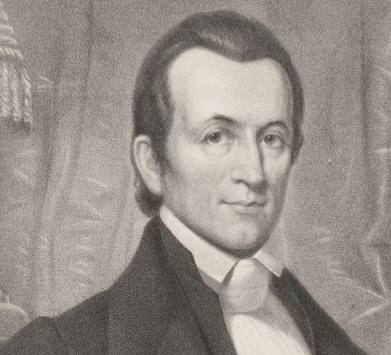
Adoniram Judson was a missionary in Myanmar for almost 40 years

Myanmar (Burma) is a historically resistant to Christianity. It has banned most Christian mission work and religious material since independence in 1948, and burning of churches is reported in the southern regions.

Yet the number of Christians has grown (especially among the minority races) from 6% in 2016 to 8% to in 2023. Of this 8%, two-thirds are from the Baptist denominations. This is due to the efforts of Adoniram Judson.

Adoniram Judson
Although the Portuguese had made occupied parts of Myanmar during the early 1600s, their mission work stopped in 1613 after they were repelled by the Burmese.

In 1813, Americans Adoniram Judson and his wife Ann arrived in Burma after the British did not want them preaching to Hindus in British-controlled India. Despite suffering a miscarriage and the death of their two-week old child along the way, both Adoniram and Ann dedicated their time to studying Burmese and their culture. In 1817 he translated the Gospel of Matthew to Burmese.

Isolated from European or American help, Adoniram finally held his first public service in 1818, and had his first convert less than a year later. Although he unsuccessfully petitioned the Burmese king Bagyidaw to remove death sentences for Burmese who converted from Buddhism to Christianity, the Judsons managed to gain 18 converts by 1823. Adonriam also made his first Burmese translation of the New Testament.

Anglo-Burmese war
In 1824, the British Empire warred with the Burma. Despite not being British, Adoniram was jailed for being a Westerner.

Ann visits an imprisoned Adoniram
As the war went poorly for the Burmese, Adoniram was recruited by Burma to act as a negotiator and translator. He was freed when the war ended in 1826. That same year, Ann passed away and their third child passed away in 1827.

With the minorities
In 1827, Adoniram made contact with the Karen people. Unlike the majority Burmese population, they were not Buddhist but animistic, and were oppressed. He surprisingly found them receptive to Christianity, and focused his efforts to the Northern Karen tribes.

He finally translated the entire Bible to Burmese in 1834. He married Sarah Hall Boardman in the same year. They continued the minister in Burma until 1845. Sarah had fallen ill and was recommended to return to America. She died en route the same year.

Adoniram married a third time to Emily Chubbuck in 1846. Adoniram and Emily both travelled to Burma to continue the mission work there. 

In 1850, Adoniram fell ill and was recommended a sea voyage. He died the same year at the Bay of Bengal. By this time, Burma had about 100 churches and 8000 converts.

Today, Myanmar has the third largest number of Baptists worldwide, behind the United States and India.

Friday, March 18, 2011

Theology 1.0: What is apologetics?


An admission of guilt?
Apologetics (in this context) is simply the defence of the Christian gospel and faith. Often mistaken for an admission of guilt, failure or fault, an apologetic (or apology) involves give an answer (or a reasoned response) to explain certain beliefs or actions. Technically sepaking, a defence lawyer would be giving apologies all the time, but they are not admissions of guilt!

Who is the apologist?
The Apostle Peter in 1 Peter 3:15 makes in clear-- all Christians are expected to give a reason for the hope the have in Christ, but with gentleness and respect.

The Apostle Paul sets up an example how how we Christians should proclaim apologetics. In Acts 17: 1-4, Paul respectfully followed Jewish traditions to reason with the Jewish audience in Thessalonia. In Athens, Paul reasoned gently (Acts 17: 16-34) but forcefully for the Christian God against other gods. He followed suit in Ephesus, where he reasoned in both the synagoue for three months, and a secular lecture hall for three years (Acts 19: 8-10).

This acts of proclaimation was not limited to Paul, as the Apostle Philip also gently and respectfully explained Scripture to an Ethiopian eunuch (Acts 8: 26-40).

How does it apply for us Christians, then?
As the New Testament shows, apologetics is not separate from evangelism. The reason why Paul and Philip spent time to reason with their peers is for the sake of the gospel (Matthew 28:16-20). Likewise, we Christians should not be afraid to show that reason is not contrary to our faith.

Although we may not have all the answers, or know everything about our faith, it should not hinder our efforts to make the gospel known. In fact, our non-believing friends would appreciate our honesty if we do not.

But I'm not an Apostle/Theologian/Priest/Pastor!
Unless you're Timothy Keller (pastor of Redeemer Presbyterian Church), Francis Collins (ex-head of the Human Genome Project) or Ravi Zacharias(Christian apologist), odds are we will not be invited to speak at university halls or the like. But no one is asking you to do that. On a personal level, we can invite our friends one-on-one for coffee or a movie. At the community level we can volunteer for church activites or a community centre soup kitchen.

There are many ways to evangelise. But let's reverse the question-- are you willing?

References
What is Apologetics?