Showing posts with label Pope. Show all posts

Wednesday, April 23, 2025

Alternative Culture: Pope Francis and his legacy


Pope Francis passed away on 21 April 2025. He was elected Pope in 2013 (the first South American to be Pope), and had served till his death.

He will likely be remembered as a transformative yet polarizing figure in the Catholic Church. Despite not being Roman Catholic, I want to give my nuance take on his legacy.

The People's Pope? 
Born Jorge Mario Bergoglio, he chose the name "Francis" after St Francis of Assisi to indicate his intention to pastor to the poor, the marginalized, and the suffering. 

His 2015 encyclical Laudato Si’ was a landmark, framing environmental care as a moral imperative and linking climate change to systemic inequality. With regard to migration, he called for building bridges rather than walls, and also criticized unbridled capitalism.

In addition, he cleaned up the Roman Catholic Church by defrocking high-profile abusers (e.g., Theodore McCarrick) and issuing Vos Estis Lux Mundi (2019) to hold bishops accountable. He also appointed more Cardinals from the Global South to have more representation in the College of Cardinals.

The Establishment's Pope?
Yet many do not see Pope Francis positively. His focus of inclusivity often confused the Christian message. For instance, he famously said “Who am I to judge?” in 2013 regarding gay individuals seeking God. This is weird because homosexuality is explicitly a sin in Roman Catholic doctrine, and also that the pope is given an authority to judge by "having the keys of heaven".

Another concern was the Pope Francis’s warm reception by secular media and world leaders (e.g., his influence at the UN on climate issues) has led some to view him as a pope who courts globalist agendas. He often made political statements that favoured the progressives in Western countries over the conservatives. The Hollywood movie, The Two Popes, even portrayed him very positively without any criticism of his progressive views. 

Furthermore, the cardinals he appointed form the Global South were often seen to be based on sharing of his political views, rather than adherence to theological matters.

His silence on controversial cultural issues in the West (e.g., abortion in political contexts) while emphasizing climate or migration can feel like a strategic alignment with progressive elites, alienating grassroots Catholics who expected a bolder defense of traditional values.

Interfaith meeting in Singapore 2010

My take on Pope Francis

As a Christian with Lutheran/Calvinist leanings, I do not recognise papal authority. Nevertheless, I do see him as a important political figure among Christian circles.

One thing I think he did well was to clean up the image of Christians, and attempt to reach out to the underrepresented. He managed to rally Western leaders to be more compassionate in their policies, especially with regard to immigration and climate change.

Yet, the most important thing I do hold against Pope Francis is that his explicit silence on the suffering of Christians worldwide.

In one example, Francis has spoken broadly about peace and religious freedom, notably during visits to Iraq (2021) and South Sudan (2023), where he met with Christian communities under threat. His interfaith efforts, like the Document on Human Fraternity (2019), aimed to foster dialogue to protect religious minorities. However, his statements often avoid naming specific perpetrators (e.g., Islamic extremism or communist regimes) to preserve diplomatic ties, frustrating those who wanted a more confrontational stance. 

In another example, he endorsed the 2018 Vatican-China agreement on bishop appointments (renewed in 2020 and 2022). Intended to unify China’s underground and state-sanctioned Catholic communities, it was criticized for conceding too much to a regime that persecutes Christians. Figures like Cardinal Joseph Zen accused Francis of betraying China’s faithful for geopolitical leverage, reinforcing the “establishment” critique.

Conclusion
Pope Francis was a great political leader, but a poor pastor. He had an uncancellable platform to bring attention to Christian persecution worldwide, but chose instead on focusing on imaging and tackling on well-established issues like climate change and transparency.


Monday, October 21, 2024

Alternative Culture: The Pope's Speech in Singapore


In September 2024, Pope Francis visited Singapore as part of his tour of Asia. He gave a speech about the importance of inter-faith relations at the Catholic school, Catholic Junior College. The transcript of the speech is here

As usual I will give a theological take on current events, also for this speech in this post.

The good
"A young person must be a critical thinker, and it is not good never to be critical."

"Do you have the courage to criticize but also the courage to let others criticize you?"

"Young people must have the courage to build, to move forward and go out of their “comfort zones.”

The Pope advocated for critical thinking, and that is always good. Too often we Asians tend to have overly fear authority. We rather go through the motion pretending a fallacy is correct then to questions the legitimacy of a claim and risk upsetting the harmony of a team project, or upsetting the boss.

Jesus said to him, “I am the way, and the truth, and the life. No one comes to the Father except through me. - John 14:6

This applies doubly for Christians. As Jesus claimed to be the truth, Christians should not be afraid to examine any claim or study any research with a critical and sceptical mind in order to find truth.

Although the pope's speech started out well, it went downhill from there.

An inter-religious gathering in Singapore, 2017

The bad (wasted opportunity)
"If you start arguing, “My religion is more important than yours...,” or “Mine is the true one, yours is not true....,” where does this lead? Somebody answer. [A young person answers, “Destruction”.] That is correct."

"All religions are paths to God. I will use an analogy, they are like different languages that express the divine. But God is for everyone, and therefore, we are all God’s children. “But my God is more important than yours!”. Is this true? There is only one God, and religions are like languages, paths to reach God. Some Sikh, some Muslim, some Hindu, some Christian. Understood? Yet, interfaith dialogue among young people takes courage."

Instead of advocating for the exclusivity of Christianity, Pope Francis chose the safer, political path. He claimed that religions are pathways to the same God, and that arguing a single, right path is "destructive". 

To me, this was a great wasted opportunity. The pope had a stage to preach Christ to a multicultural Singapore, and threw it away. It is not like this platform was unprecedented; the Apostle Paul took his chances at multicultural Athens 2000 years ago and preached the following in Acts 17:

So Paul, standing in the midst of the Areopagus, said: “Men of Athens, I perceive that in every way you are very religious. For as I passed along and observed the objects of your worship, I found also an altar with this inscription: ‘To the unknown god.’ What therefore you worship as unknown, this I proclaim to you. The God who made the world and everything in it, being Lord of heaven and earth, does not live in temples made by man, nor is he served by human hands, as though he needed anything, since he himself gives to all mankind life and breath and everything. And he made from one man every nation of mankind to live on all the face of the earth, having determined allotted periods and the boundaries of their dwelling place, that they should seek God, and perhaps feel their way toward him and find him. Yet he is actually not far from each one of us, - Acts 17: 22-28

While as Christians we are taught to be live in peace with our neighbours, ultimately we are also to speak of God's love and sacrifice for everyone.

Conclusion
While we Christians should strive to live in harmony as far as possible, we are called to evangelise.

And Jesus came and said to them, “All authority in heaven and on earth has been given to me. 19 Go therefore and make disciples of all nations, baptizing them in[b] the name of the Father and of the Son and of the Holy Spirit, 20 teaching them to observe all that I have commanded you. And behold, I am with you always, to the end of the age.” - Matthew 28: 18-20

Monday, March 04, 2024

Theology 1.0: What did Pope Leo I tell Attila the Hun?


The Huns, as depicted in the game, Total War: Attila

From the year 430s to 450s, Europe was terrorized by nomadic barbarians known as the Huns. During this period of time, Rome split into two - the Western and Eastern Roman Empire. Rome was at its lowest state. The Eastern Roman Empire was richer and controlled the Mediterranean, but faced the powerful Sassanid Empire from Persia. Western Rome stretched from Spain to Italy and Tunisia, but could barely hold on.

Attila led the Huns to extracted tribute (protection money) from both Roman Empires after raiding and sacking their cities. At Attila's peak, he received 700 kg of gold per year from Eastern Rome.

In 450, Attila renewed his campaign against Western Rome. However in 451, Attila suffered massive losses at the Battle of the Catalaunian Plains (Northeast France). Undeterred, he launched an invasion of Italy and pushed his way toward Rome, sacking the city of Aquileia in the process. His forces stopped at the River Po in 452.

The meeting with Pope Leo I
With the Western Roman Emperor's blessing, three envoys were sent to negotiate peace with Attila. Gennadius Avienus, Memmius Aemilius Trygetius (both civilian officers), and Pope Leo I. While there are no records of what was discussed, Attila agreed to remove his forces from Italy peacefully. No gold was exchanged and no betrothal was offered.

The Meeting of Leo the Great and Attila by Raphael. Painting was done between 1513 and 1514.


So why did Attila retreat?
While Attila was rumored to have shown deference and mercy to Christian bishops like Lupus of Troyes, this meeting with Pope Leo I was well-recorded to have happen. Yet there are different ideas of Attila's sudden withdrawal.

Prosper of Aquitaine, a Christian historian mentioned that Attila was so impressed by the pope that he withdrew.

Priscus, an Eastern Roman diplomat wrote that Attila was superstitious and learned that another barbarian leader, Alaric of the Visigoths died one year after sacking Rome in 410.

Hydatius, a Western Roman chronicler was a bit more pragmatic in his interpretation. He remarked that the Huns was worn down by plague and starvation (there was a famine in Italy at that time). Thus Attila knew he had little reward in taking Rome. This seems to be the current favored theory as it has been reasoned that Attila was not a Christian and previously respected strength and gold.

What does this mean for a Christian?
No doubt there was probably some level of fear for Pope Leo I and his companions. After all, Priscus wrote (of Attila),

He was a man born into the world to shake the nations, the scourge of all lands, who in a way frightened all mankind by the terrible rumours that were spread about him.

In the Christian view, there are two types of fear. One is the fear of God which is to have reverence and respect for Gods nature and power. This fear is beneficial.

The fear of the Lord is the beginning of wisdom;
    all those who practice it have a good understanding.
    His praise endures forever! - Psalms 111:10

Yet we know that there is a type of fear that hinders us Christians from doing God's work.

For this reason I remind you to fan into flame the gift of God, which is in you through the laying on of my hands, for God gave us a spirit not of fear but of power and love and self-control. - 2 Timothy 1:6-7

While many of us will never be called to negotiate with a foreign aggressor or terrorist, we have experienced this type of fear before. Now I do not know if Pope Leo was thinking the same thing, but I do know that my worst and most fearful days are never as bad because I trust God.

In God, whose word I praise,
    in the Lord, whose word I praise,
in God I trust; I shall not be afraid.
    What can man do to me? - Psalms 56:10 -11

Scary our problems are, ultimately God is with us as long as we trust and love Him. 

For more reading:

The Roman Catholic view of the incident

Thursday, February 02, 2012

With Due Respect: The Church persecuted Galileo for his scientific views!

Tower of Pisa, Italy 2009

Galileo, the man, the myth
Galileo Galilei (1564-1642) is often portrayed as a man ahead of his time. After all, he was a brilliant astronomer and mathematician. Appointed to the chair of the University of Pisa in 1589, he was spent the next twenty years making groundbreaking scientific discoveries.

The story of the man himself is often used as an example of how Christianity inhibits scientific discoveries. Galileo is shown as a man who was the first to show that objects of differing weights fall at the same speed, disgraced Aristotle's theories, proved Copernicus's ideas (of heliocentrism; the idea that the earth moved around the stationary sun) right, and ultimate irked the Roman Catholic Church with his findings so much that they finally persecuted him. A fascinating tale-- too bad none of it is true (Hannam, 2011).

Wait, what?
First of all, the idea of falling bodies moving at the same speed was already being championed by the scientific community at that time, as part of the project to show that the Greek philosopher Aristotle was wrong among many things. Secondly, Copernicus's ideas had already been proven by Johannes Kepler. And lastly, the Roman Catholic Church placed Galileo under house arrest for political reasons, rather than scientific or theological reasons. For the purpose of this post, I will be focusing on the apparent conflict between Galileo and the Roman Catholic Church. (Hannam, 2011)

Welcome to the 17th century
During the early 1600s, the prevailing view of astronomy were that of Aristotle's. The heavens (which could neither be generated nor decayed) were moving in concentric circles, with earth at the centre.

In 1609, Galileo was making astronomical observations using a brand new scientific equipment-- the telescope. After noticing more stars in the universe than previously thought, he observed sunspots and lunar craters. This suggested that the heavens were not unchangeable and perfect circles as Aristotle thought. More importantly, he noted that the planet Venus had different shapes at different times-- sometimes a complete disk, sometimes a semi-circle, and sometimes even barely visible. This made him conclude that Venus did not revolve around Earth; it revolved around the Sun.

The die-hard Aristotelian professors were eager to reject Galileo findings in advance. His colleague, Giulio Libri (c.1550-1610), Professor of Aristotelian Philosophy at the University of Pisa had trouble seeing through the telescope, and when he died, Galileo remarked that he could probably see the moons of Jupiter "on the way to heaven". This statement suggested how Galileo treated his opponents publicly, and it was no surprise that Galileo had few friends later in his life.

Ironically, it was the Jesuits (the Roman Catholic order of monks dedicated to education) who first warmly received Galileo's findings. The Jesuit Christopher Clavius (1538-1612), the most respected astronomer at that time confirmed his discoveries, and planned to set about ideas to reform astronomy (Lattis, 1994). The problem for Galileo now was that even though his observations contradicted the Aristotelian model of astronomy, he could not prove Copernicus's.

You mean there is another model?
Years earlier, another astronomer named Tycho Brahe (1546-1601) proposed his system of astronomy-- the earth was stationary, the Sun went around the earth, and everything else moved around the sun. After Galileo presented his work in 1611, Tycho's model became the preferred one over Aristotle's, and Copernicus's.

Furthermore, Copernicus's model was already in a bad light--Cardinal Roberto Bellarmino (1542-1621), the 'Consultor of the Holy Office and Master of Controversial Questions', was unconvinced that the Copernicus model was true (as it had yet to be demonstrated) and an Italian theologian Paolo Foscarini (1565-1616) had been aggressively advocating the Copernicus model. Thus in 1616, Copernicus's Revolution of the Heavenly Spheres was suspended from public till it's correction (Hannam, 2011).
Vatican City, 2009

Friends in high places
In 1623, Galileo's good friend, Cardinal Maffeo Barberini (1568-1644) ascended the papacy to become Pope Urban VIII. Earlier that, Galileo published Il Saggiatore ('The Assayer'), mocking Jesuit Orazio Grassi(1583-1664)'s theories about comets. Grassi had argued that comets were further from the earth than the moon, while Galileo insisted that comets were an atmospheric illusion. (Incidentally, modern science concurs with Grassi.) Pope Urban VIII enjoyed the Il Saggiatore, and composed a poem in Galileo's honour.

Taking advantage of his new-found favour with the Catholic Church, Galileo travelled to Rome in 1624 to meet with the pope to explain his advocacy of the Copernicus model. Despite meeting Galileo no less than six times, Pope Urban VIII remained unconvinced. While he did not consider the Copernicus model heretical, he was unsure if it was correct either. He encouraged Galileo to treat the Copernicus's ideas as a hypothesis, rather than a fact, and asked Galileo to publish a book comparing the three models of astronomy (Aristotelian, Tycho and Copernicus). Pope Urban VIII was actually asking Galileo to be more open-minded in this case (Hannam, 2011)

But Galileo took the pope's kindness for granted
So in 1632, Galileo wrote Dialogue Concerning The Two Chief World Systems. In it, he portrays the astronomical debates as a discussion between an academic named Salviati (who represented Galileo), a Aristotelian simpleton named Simplicio and a biased chairman named Sagredo (who always agrees with Galileo's views).

When Pope Urban VIII read the book, he was furious. Some of the pope's doubts and arguments against Copernicus's models were placed in the mouth of Simplicio. Furthermore, Galileo's book omitted Tycho's model entirely, even though Galileo's "evidences" for Copernicus's model could also be applied to Tycho's (Finocchiaro, 1989)*.

And Galileo's punishment? He was NOT burnt, tortured or even flogged. Despite his soured relations with the pope, Jesuits and academia, he was placed under house arrest, and lived in comfort till his death in 1642.

Conclusion
So in the life of Galileo we learnt that
a) Despite Galileo being right about Copernicus's models, he did not prove it scientifically or observationally, although he showed it to be superior to Aristotle's (but not Tycho's).

b) The Roman Catholic Church did not go after Galileo because his findings were a threat to Christianity, but because he was extremely rude to his colleagues and superiors. He was persecuted for personal (and perhaps political reasons).

c) Although this example often crops up a science vs Christianity case study, it is a misrepresentation of issue.

Let me be clear-- Galileo was a great scientist and presenter. He was able to write fluently and present his scientific ideas as a coherent whole. However, his attitude got the better of him.

References
Finocchiaro, M.A. (1989) The Galileo Affair

Lattis, J.M. (1994) Between Copernicus and Galileo

Hannam, J. (2011) God's Philosophers

Further reading
Bethinking

*Galileo's evidences for a rotating earth mainly included the existence of tides in the waters. He argued that tides exist because of the inertia experienced by the waters as the earth moved. However, it was not convincing at that era because if he was right, we would been experiencing great winds all the time. Now we know tides are caused by the moon's gravitational effect on the waters (Hannam, 2011).

Wednesday, December 21, 2011

Theology 1.0: The Reformation in England and Scotland-- a tale of two Reformations

[Author's note: The following post is dedicated to Dishon, who is interested in what happened to England during the Reformation]

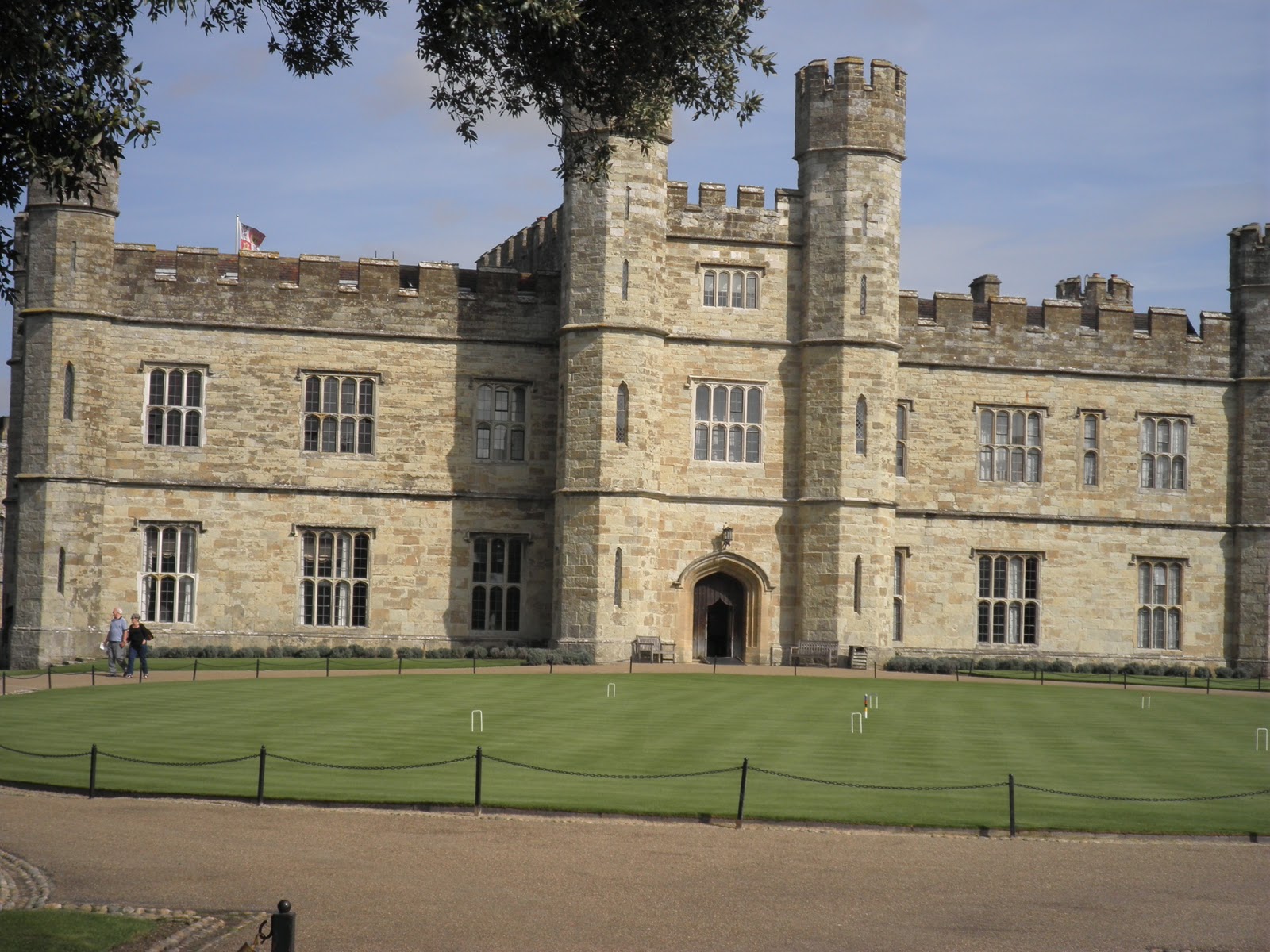
Leeds Castle, UK, September 2011

Pre-Reformation Britain
Robert Grosseteste
England and Scotland, although not the most powerful countries at those times has a unique relationship with the Reformation. For instance, long before Luther came up with his understanding of justification, there was Robert Grosseteste. Grosseteste was appointed the Bishop of Lincoln in 1235. He believed that clergy should place more importance in preaching than giving Mass, and that preaching should be done in English (so that the commoners would understand), rather than Latin (as all Roman Catholics priests would). He was also famous for speaking against the pope on several issues, including the appointments of non-English speaking clergy in England, and the paying of the crusades.
The exhumation and burning of Wycliffe's bones.

John Wycliffe
Then there was also John Wycliffe, who was a preacher in Oxford. During his time, the Roman Catholic church appointed two popes (see my Reformation post for details). He then began to identify the Bible as the source of spiritual authority (rather than the pope). Having ideas which were contrary to orthodox Roman Catholic beliefs (such as rejecting papal authority), he soon irked the English authorities enough to force him to retire. After retiring, he started a secret project to translate the Latin Bible into English. He passed away in 1384, thankfully before the Roman Catholic Council of Constance deemed him a heretic. They exhumed his body, burned his bones and scattered his ashes.

Yet his legacy lived-- his works would inspire the Czech Jan Hus, and later the Reformer Martin Luther.

Patrick Hamilton
Born in Glasgow, Patrick Hamilton was appointed an abbot and received his education at the University of Paris. Paris was where Hamilton would encounter the works of the Reformer Martin Luther. Returning to Scotland, he began to preach, and soon was tried as a heretic and burned in 1528. Despite his high connections, Hamilton was willing to die for his beliefs (he agreed to be tried knowing the likely consequence). This raised the profile of Protestantism in Scotland, as many commoners wondered why this new theology was that one was so ready to be killed for it.

Thomas Bliney
Educated in Cambridge,  Thomas Bliney had a personal struggle with sin, but came  an understanding of salvation via faith in Jesus Christ with the passage of 1 Timothy 1:15 of the Erasmus's translation of the New Testament. Just as Erasmus's work inspired the Reformation in Germany with Martin Luther and Switzerland with Ulrich Zwingli, Bliney began to preach against saints and relics veneration, and against pilgrimages to holy places. However, Bliney was no Lutheran-- he upheld the authority of the pope and the sacrifice of Mass. Nevertheless, he was still burned for his views in 1531.

William Tyndale
As Luther's works began to flood into England (despite a ban), a linguist named William Tyndale started translating the Bible into English. Inspired by Erasmus's translation of the New Testament, Tyndale decided to sail for the German town of Worms (where Martin Luther had been tried years ago) to read the Bible in the original Hebrew and Greek. His translation of the New Testament, together with his work, Parable of the Wicked Mammon (which argued for salvation by faith alone) was smuggled back to England. Followers of the late Wycliffe treated the works as a godsend; the English bishops on the other hand were not so keen.

Tyndale had translated 'do penance' in the Latin Bible as 'repent' in the English, 'charity' as 'love' and 'priest' as 'senior'. What was once viewed as an external sacrament, was now a call for the inward change of the heart. Tyndale had translated a good portion of the Old Testament before the wrath of the Roman Catholics caught up with him. About 16,000 copies of his translations had been smuggled into England. Executed in 1535, his famous last words were "Lord, open the King of England's eyes!".

The Reformation in England-- the monarchs
Henry VIII
The king that Tyndale was talking about was Henry VIII. Ironically, he was the one who kick start the Reformation in England.
King Henry VIII

King Henry VIII was a deeply religious king-- he would serve Mass to his priests and attend Mass thrice a day. Passionately Roman Catholic, he opposed the Reformer Martin Luther's view with his work, A Defense of the Seven Sacraments (written by several ghost writers). For his zeal, the pope award him with the title, Defender of the Faith. It was highly unlikely that this king would be favourable to the Reformation.

The most potent problem that King Henry VIII was being without a son. He had just went through a war of succession (War of the Roses), and having a son was essential for political stability. His wife, Catherine of Aragon underwent a series of miscarriages, only one baby (Mary I) survived passed infanthood. Interpreting this as punishment for marrying his brother's widow(Leviticus 20:21), Henry VIII sought to annul his marriage and find a new wife. He sough papal favour (with Pope Clement VII) to do so.

But there were two problems-- firstly, Catherine of Aragon insisited that her marriage with Henry VIII's brother was never consummated, so her marriage with Henry VIII was legitimate. Secondly, Catherine of Aragon's nephew was Emperor Charles V of the Holy Roman Empire. Charles V had sacked Rome once and imprisoned Pope Clement VII. There was no way the pope was going to irk the wrath of Charles V again.

But the king was determined. He assembled an army of scholars to prove that his case was right, and that the pope had no authority over him. They did one better-- they showed that the church in England was planted earlier than the church of Rome, and thus the church of England was independent of the church of Rome.

Armed with this reasoning, King Henry VIII made laws to favour to reflect the increasing independence of the church of England, annulled his marriage with Catherine of Aragon, appointed Thomas Cranmer as Archbishop of Canterbury (the head of the church of England) and married Anne Boleyn. The separation between the churches of England and Rome was complete in 1534, where the English Act of Supremacy declared the King of England, the supreme head of the church of England.

However, his marriage with Anne Boleyn failed to produce a male heir, and rumors that she was having an affair spread. So she was executed and King Henry VIII married Jane Seymour. She was his favourite wife as she bore him his only son (Edward VI). However, she died from complications in childbirth.

Although Henry VIII had a son, he wanted more to secure his succession. With the suggestion of his chief minister Thomas Cromwell (not to be mistaken for Lord Protector Oliver Cromwell; who ruled England a century later), he married Anne of Cleves, but was so repulsed by her that he never consummated the marriage. Cromwell paid with his head, and the marriage was soon annulled.

He then married Catherine Howard, but she was caught being unfaithful, so she was executed. He finally married Catherine Parr, but it was a childless marriage. King Henry VIII died, leaving Edward VI to succeed him.

Summary of Henry VIII's marriages
One thing to be noted is that King Henry was no Protestant (despite his break with the Roman Catholic Church). Although he had appointed a Protestant Archbishop (Thomas Cranmer), a Protestant Chief Minister (Thomas Cromwell), and married Protestant wifes (only Catherine of Aragon and Catherine Howard were Roman Catholic), all King Henry VIII was interested in was to deny the pope's supremacy in England. In other words, he did not want a Roman Catholic England or a Protestant England, he wanted an English Catholic England (the difficulty is deciding what was Roman to be rid of, and what was Catholic to be retained).  For instance, in a single day he burned three Protestants for heresy and hanged three Roman Catholics for treason.

Nevertheless, he appointed Protestants in key positions (who pushed their Protestant agendas). Egged on by Thomas Cromwell, he stripped the Roman Catholics monasteries of their land (which he sold for funds).

Furthermore, having used the Bible for his case for his first annulment, it was hard for the king to limit the authority of Scripture. He decreed that every church should have at least one Bible. Soon private Bible-reading became a popular hobby (even the illiterate started to learn how to read, to be in touch with the Word of God), and common folk started challenging priests on their theological ideas. Although King Henry VIII was not really Protestant, he had unleashed the Reformation in England.

Edward VI
In 1547, Edward VI was nine, and succeeded his father as king. Due to his youth, his uncle, Edward Seymour ruled in his stead as Lord Protector. Seymour and the Archbishop Thomas Cranmer worked to acclimatised England to the Reformation. Only preaching in English was allowed, images of saints were removed from churches and chantries were dissolved (as they encouraged praying for people in purgatory).
King Edward VI
The Reformists in the English government were adamant is ensuring that the move from Roman Catholic theology was a slow reform, rather than rapid revolution. For instance, the 1549 English Book of Common Prayer procedure for Mass included the words "The Body of Our Lord Jesus Christ, which was given to thee, preserve thy body and soul unto everlasting life". Both Reformists and Catholics could attend Mass with clear conscience.

However, Edward VI died at the age of 15 in 1553. John Dudley, who had succeeded Edward Seymour as Lord Protector panicked-- he knew the person in line was the strongly Catholic Mary (Edward VI's half-sister). He appointed Lady Jane Grey (Mary's cousin) to be the next queen, but to no avail. The people were more interested in the monarchy than religion. Mary gained support and dispatched Lady Grey to be executed. The Protestants supported Mary, unaware of how harshly she would treat them.

Mary I
Daughter of Catherine of Aragon (Henry VIII's first wife), Mary had been declared illegitimate when her father broke with the church of Rome. To Queen Mary, the Reformation was not only promoting a heresy, but the source of all her troubles.

Swiftly, Queen Mary instilled Roman Catholic policies. Cardinal Pole replaced Thomas Crammer as Archbishop of Cantebury. Married clegry were separated from their wives. Bibles were removed from churches. At first, the English people generally happy to accomodate.

To wipe out twenty years of history was going to difficult. For one, forcing landowners to return their land to the monastrieswas unpopular. Secondly, the people had already read the Bible, so they had doubts about Roman Catholic teachings. Thirdly, her choice of potential spouse was the future King Phillip II of Spain, a traditional enemy of the English.

Mary's policies soon became brutal-- she burnt popular Protestant preachers and figures like Hugh Latimer (Bishop of Worcester), Nicholas Ridley (Bishop of London) and Thomas Cranmer  (ex-Archbishop of Cantebury). Watching the brave martyrs die had the undesired effect for Mary-- the populace were moved by the courage of the martyrs (although Cranmer renounced Protestantism initially under torture, he took back back renouncement before his execution). Hundreds of Protestants were killed during Bloody Mary's reign.

Mary passed away from stomach cancer in 1558, without an heir, allowing her sister, Elizabeth to take the throne.

Elizabeth I
The famed Queen Elizabeth I regarded her reign as God's work-- after all, she survived Bloody Mary's policies. And Elizabeth I had to be Protestant-- her mother was the reason why the England broke from Rome, and Rome did not recognise Elizabeth I's reign as legitimate.

Knowing there were many different Protestant factions in England, as the head of the Church of England, she kept to a very English Protestantism. She wanted England to be a united, moderate Protestant nation. Everyone had to go church, whether they agreed with the theology behind it or not. Catholics did not need to take Communion if they did not want to, but just had to attend church. Elizabeth was concerned that foreign Catholic nations might invade if she was too Protestant.

Not that it helped-- in 1570, the Pope encouraged English Roman Catholics to rise up against their Queen. Now being a Catholic was dangerous-- Elizabeth I had tolerated them, now they were seen as traitors. The Catholics of Europe saw England as a sole Protestant nation to be brought down-- if England fell, the spirit of the Reformation would die.

The Catholic's hope was in Elizabeth I's Catholic cousin, Mary, Queen of Scots. If Elizabeth was assassinated, she would be the next queen. But this Mary was neither popular in Scotland, nor with Elizabeth I. Under arrest in England, Mary was soon suspected of treason and executed. Mary's son, James was being brought up by Protestants. The English Protestant line seemed secured, even if Elizabeth remained virgin (and hence childless).

In 1588, the Catholics had enough. Under the pretext of making England Catholic, King Philip II lauched the Spanish Armada against England. With the help of bad weather, the English navy defeated Spain. Elizabeth I saw this as God's blessing on a Protestant nation. She continued her Protestant moderation.

The old Roman Catholic ways slowly died out in England-- the only Bible the people knew was English, the only church they attended was Protestant and the only Protestant theology was taught. This secured Protestantism in England.


The Reformation in Scotland-- the people
 John Knox
While King Henry VIII of England was having marriage problems with the Roman Catholic Church, King James V of Scotland had no problems with Rome. He was already the head of the Church of Scotland, and there was no benefit for James V to break with Rome.
John Knox
In 1542, James V passed away, and Mary, Queen of Scots was next in line. However, she was still an infant, and James Hamilton, the Earl of Arran was her regent. James Hamilton was famous for flipflopping between Protestantism and Catholicism.

In 1543, James Hamilton favoured the Protestants. Bibles were sold and Protestant preachers were appointed to church positions. He even had Cardinal David Beaton of St Andrews arrested.

In 1544, James Hamilton favoured the Catholics. Reading the Bible (in the vernacular) was illegal again, and the leading Protestant preacher, George Wishart was burned as a heretic. Upset, the Scottish Protestants marched up to St Andrews castle and murdered Cardinal Beaton in 1546. French troops (under Scottish permission) marched up to St Andrews castle and defeated the Protestants. Wishart's ex-bodyguard, John Knox was among the defenders.

Condemned to be slaves on board French ships, Knox and his defenders caused problems for his captors. Knox refused to respect the Catholic Mass and tossed an image of the Virgin Mary overboard. In 1549 he was released (under unclear circumstances).

Taking refuge in England, Knox tried to persuade Thomas Cranmer to speed up the Reformation in England. When Bloody Mary took over, he left for Geneva. Coming into the city that hosted the Reformist John Calvin, John Knox thought Geneva to be a paradise. In 1558, he penned The First Blast of the Trumpet Against the Monstrous Regiment of Women. To Knox, the horrors unleashed on both England and Scotland were due to the reigns of both Blood Mary and Mary, Queen of Scots. It was poorly timed, as Mary I's reign was short. No way would Queen Elizabeth allow Knox to return after writing such a sexist book.

Nevertheless, Knox returned to Scotland in 1559. There, his sermons stroke up passions of Protestantism. Despite being declared an outlaw, Catholicism was beginning to be seen as something foreign. After all, Mary, Queen of Scots was living in France, married a French and was brought up in France. Soon Protestantism was fused with Scottish nationalism, and the French were driven out of Scotland (with the help of the English; Queen Elizabeth I would rather have a Protestant Scotland than a Catholic one).

In 1560, the Scotish Parliment declared that the pope no longer had any authority in Scotland, and a new confession of faith (the Scots Confession) was drawn up by John Knox. Mary, Queen of Scots, returned to Scotland the next year, but she had to accept a Protestant Scotland, whether she liked it or not.

Conclusion
What a turn of events! In 1558, both England and Scotland were Catholic, but both became Protestant in 1560. Yet the story of the Reformation in both these kingdoms were different. For one, the Reformation in England was monarchy-driven, while the Reformation in Scotland were people driven.

Now when comparing the stories of the Reformation in England, Scotland, Wittenburg (led by Luther), Geneva (led by Calvin) and Zurich (led by Zwingli), I am quite surprised by how different the events were. While it is possible to use the Reformation for political purposes (as in England), the Reformation can also occur without political support (as in Zurich and Geneva).

What this showed that the Reformation was not moral, social or political reform dressed up in theological clothing, but that a theological revolution laid underneath everything. As a project to keep living the gospel, we should not belittle the fact that theology may drive history.


For further reading

Reeves, M. (2009) The Unquenchable Flame

Ryle, J.C. (1960) Five English Reformers

Recommended websites

Theology Network

Sunday, July 10, 2011

Theology 1.0: What is the Reformation?

Vatican City 2009
[Note: This post is dedicated to my Christian friends whom I known (from Singapore and the UK) over the past 4 years. This is for all those who wanted to know more about the Reformation, but was overloaded by Wikipedia.]

Say the word Reformation, and immediately many people have different ideas.

Images of burning pyres and running nuns as the Protestants led by Martin Luther fled the Catholic church immediately fill the minds of some of the ill-informed. Some history buffs may portray it as an historic reactionary movement against the corruption of the church. Others may say it was just an European power play against authority of Rome.

While the mentioned views are slightly true, they are mere caricatures of what the Reformation was. For us to fairly understand what the Reformation was, we must go back in time.

Note: Before I start, I must add I am not a professional theologian or historian (I am a biology student finishing his Masters course), so bear in mind whatever I write is not authoritative. That said, I have read roughly around the issue, and there is a list of recommended readings below.

Before the Reformation
Like most events that changed society, the Reformation (also known as the Protestant Reformation or Protestant Revolt) was not a knee-jerk reaction that began in 1517 when monk Martin Luther published his Ninety-Five Theses, a list of objections to Roman Catholic practices. Dissent against the Pope had been brewing for years, and perhaps centuries.

The French Popes
Pope Clement V

 In the time of the Medieval Europe, all Christians looked to Rome as the Mother Church, and the Pope as the Father or Christ's representative on earth. (There was the Eastern Orthodox Church, which had broken ties with the Roman Catholic Church in the twelfth century, but for the sake of being concise, I will not mention them further).

In 1305, the Archbishop of Bordeaux was appointed Pope (Pope Clement V). Instead of relocating to Rome (as expected of Popes), he stayed in Avignon. This delighted the French king-- the residence of the Pope meant that God had shown his favour to France. Unsurprising, the next few Popes were French. Outside of France, the people were not as delighted-- the Pope was supposed to be the Bishop of Rome, the Mother Church. Had the Pope forgotten his duties?

In 1378, the people of Rome were fed up, and besieged the College of Cardinals. Naturally they elected an Italian Pope-- Pope Urban VI. However, Pope Urban VI's aggressiveness and arrogance led to many to voice their dissent (Pastor and Antrobus, 1906), and a new Pope Clement VII (aka Antipope Clement VII) was elected. This led to the division of the church now known as the Western Schism, where the kingdoms of Medieval Europe was divided in their papal alliances. For instance, France supported the French pope (Antipope Clement VII), while England would support another one.

A divided Europe was seen as a disaster for the church, so a new pope was elected (Antipope Alexander V). However, the two existing Popes would not go down easily, and eventually, a more determined council, the Council of Constance which met from 1414-1418 managed to get the two of the three Popes to resigned (Antipope Benedict XIII, who was Antipope Clement VII's successor, refused to step down).

Although the schism had ended, the people of Medieval Europe were genuinely confused. Who had more authority over the Church? Was it the Pope, who was Christ's representatives? Or the council, who elected the Pope?

To add to this problem, the next few Popes were of dubious reputations (eg: Pope Alexander VI had mistresses, while Pope Julius II had an aggressive foreign policy)-- it was a bad time for the Church to lose its respectability.

John Wycliff
Brought in the time of the Western Schism, an English priest named John Wycliff began to publicly identify with the Bible. He argued that the papacy was a human invention, and that the Bible had supreme spiritual authority. As he argued against several Roman Catholic practices and doctrines, he irked the English and drew the attention of Rome, and was forced to retire.

Still he commissioned preachers and started a secret project to translate the Bible (which was written in Latin) into English. At that time, sermons were only preached in Latin (and the general public did not understand them). After dying in 1384, the Council of Constance declared Wycliff a heretic and exhumed his remains.

However Wycliff's ideas and works were received eagerly by Jan Hus, the rector of the University of Prague. He began to critique the Pope and the Church on issues such as indulgences (paying a way into heaven) and the existence of purgatory. Summoned to Council of Constance to defend his views, he was instead imprisoned and eventually burnt for heresy (despite being promised safe passage).

This led to an armed revolt in Bohemia, where Hus was well-respected. A series of crusades were launched against the Hussites, but the Hussites held on. This allowed an independent church to be established. Hussites preachers were free from the control of the papacy.

Printing presses
In 1440, a scholar named Lorenzo Valla published his findings on the document Donation of Constantine. He challenged the claim that this fourth-century document detailing Emperor Constantine's handing over the lordship of the Western Roman Empire to the pope was actually written in the 700s. This was vital as that document was the basis in which the medieval popes asserted their authority over Europe. The implications were huge-- if such a key papal claim was forged, was anything else?

Inspired by Valla, Erasmus of Rotterdam published a Greek translation of the New Testament in 1516. Erasmus did not place the official Latin translation along side it, but used his Latin translation. Erasmus meant to bring a healthy reform to the church by drawing more attention to the Bible, and even had the Pope's blessing. However as with Valla, his works had big consequences for the future of Christianity. For instance, in Matthew 4:17, the official Latin version had 'do penance' while Erasmus had 'be penitent'. If Erasmus was right, it challenged a Roman Catholic belief of the external sacrament of penance. Again, if the theologians of Rome were reading the Bible wrong, what other beliefs were wrong?

But the seeds of the Reformation were just ready to sprout as the printing presses (developed by Johanns Gutenburg) became commercially available around 1450s. Now not only were these books printed faster and in greater numbers than ever before, the first book was Gutenburg's Latin Bible. It was time of the medieval world to be broken by the Word.


The History of the Reformation

Martin Luther

Martin Luther
Born on 10th November 1483, Martin Luther was raised to be a lawyer. However, at the age of 21, Luther had a near-death experience and decided to become a monk. And a pious monk he was. Still, there were many things that troubled him as a monk-- he was constantly working to be right with God, and as a result was never really joyful. He was worried of his inattentiveness during sermons, his wandering eyes and poor singing. Worst of all, he wondered if he was truly repentant of his sins, or just trying to avoid damnation (Kittelson, 1986)?

Posted to be a teacher of theology at the University of Wittenberg in 1508, Luther came into conflict with Johann Tetzel, a monk who was selling indulgences. (Indulgences were remissions of sins). Luther argued that forgiveness was for God to give, and was horrified that Tetzel was raising money for the rebuilding of St Peter's basilica. As a result, Luther nailed his famous Ninety-five Theses to a church door on 1st November 1517 (All Saint's Day). Contrary to popular belief, it was not a call to reform, or even a Reformation manifesto. It was simply an academic challenge over the issue of indulgences.

Luther's challenge gained him many enemies, and Johann Eck (a theologian) famously accused of having more in common with heretics Wycliff and Hus as Luther placed the Bible as superior to the Pope. Such an accusation fertilised the seeds of the Reformation in Luther's mind-- if the Pope was always superior to God's word, then the church cannot be reformed by the Bible. This made Luther doubt the papacy more.

But it was not until 2 years later that Luther himself came up with ideas of reforming the church. For the first time Luther realised the good news that God gave His righteousness for sinners. The Christian life was not about moral perfection by the sinner's own effort, but accepting God's perfect divine righteousness.

Then Luther began to write-- not in Latin (only academics could understand Latin), but in ordinary German, so that commoners would understand it. He challenged the supremacy of the Pope (that only the Pope could interpret the Bible, only the Pope could reform the church etc) and the traditions (such as the sacraments) of the Roman Catholic Church. Most importantly, in his work On the Freedom of a Christian he asserted that faith was simply trusting in God's promises and that was all that was needed for salvation (justification by faith).

This provoked Rome, and he was excommunicated by Pope Leo X after refusing to recant his works. The Holy Roman Empire (not to be mistaken for Rome, or the Roman Empire) summoned him to a council in the town of Worms. At that event, now known as the Diet of Worms, Luther again refused to renounce his works, causing Emperor Charles V to declare Luther an outlaw, and banned anyone from providing him food and shelter.

Luther fled to Wittenberg, but he was kidnapped by unexpected allies en route. Elector Frederick the Wise had decided to place Luther under safe custody to protect him from the wrath of Rome and the Holy Roman Empire. Staying at Wartburg Castle, he translated Erasmus's New Testament into ordinary German (and arguably became the Father of Modern German).

Returning to Wittenberg after 10 months, Luther was careful in executing his reformist ideas. It could not just be simply doing everything opposite the Roman Catholic Church does. Some, inspired by Luther's defiance, started to destroy images of saints and eating on fast days. No, Luther was certain that if the Word of God was to be spread, it would be through preaching, and not by force. The Word of God itself would convince. He started congregational singing (before that only priest sang), trained preachers and even advised kings interested in the Reformation. He wrote catechisms (basic explanations of faith) and encouraged his congregation to memorise them.

The Reformation had begun. So essential was Luther to the Reformation that when he was thought dead after the Diet of Worms (he was kidnapped instead), the famed artist Albrecht Ducher wrote that if Luther was dead, "who will teach us the holy gospel so clearly?"

However, Luther was not the only person who initiated the Reformation. Almost independently, other Reformers had started their reforms at about the same time.

Battle of Kappel
Ulrich Zwingli
Ulrich Zwingli was born 1st January 1484 in a small alpine village called Wildhaus in Switzerland. One of Switzerland's key exports of that time were mercenaries, and Pope Julius II (who had an aggressive foreign policy) often sought the Swiss to provide the backbone for his armies.

At 22, Zwingli was a priest at Glarus, and decided to join the Pope's army as an army chaplain. At the Battle of Marignano, over 10, 000 Swiss died, shocking Zwingli from the glories of war and bloodshed. He realised he had misunderstood warfare and the Pope. If he was mistaken about that, what else was he wrong about?

Returning to Glarus, Zwingli realised all he had read was Bible commentaries and not the Bible itself. Buying a copy of Erasmus's translation of the New Testament, Zwingli made the revolutionary step of attempting to understand it. At that time, understanding the Bible required the Pope's guidance, and attempts to otherwise implied that the Pope was not God's appointed interpreter. After a near death experience (with a plague in 1519), Zwingli attributed his survival to God's mercy and decided to spend more time mediating on the Bible.

Unlike Luther, Zwingli had little problems with the papacy and continued to receive a papal pension (for his military service). He even accepted the appointment of Great Minister of his canon. However, as he began to preach directly from the Bible, demands for reform were made from Zurich. Yet Zwingli turned the people down-- he was concerned that any poorly executed reform would be a simple cosmetic, political change. No, he had to change people's hearts. Thus, Zwingli preached, instead of campaigning for change.

Not everyone in Zurich liked the changes. Rumours began to spread that Zwingli was a heretic, or at worst, the Antichrist. To clear matters, Zwingli wrote his 67 theses, but again unlike Luther who focused on the issue of indulgences, Zwingli critiqued the theology of church. He argued that Christ rules the church via His word rather than the Pope, and that at the cross, our redemption is complete (challenging the need for Mass). The first shot at Rome had been fired.

To combat Zwingli, a public debate was organised in 29th January 1523. The city hall of Zurich was packed to see the debate. Zwingli was no pushover-- not only did he bring copies of the Hebrew Old Testament, Greek New Testament and the Latin Bible, he was able cite passages in their original from memory. So prominent was his victory that the city council of Zurich ruled that only preaching that was biblical would be allowed in Zurich.

Soon, schools for Bible studying were set up and monasteries were closed down. Relics and images of saints were removed from the churches. Finally on Easter 1525, bread and wine were served in church instead of Mass. The preaching was given in Swiss German, rather than Latin. No longer receiving sacraments from Rome, the break from the Catholic church was complete, and the Reformation in Switzerland had begun.

In 11 October 1531, the Swiss Catholics fought the Protestants at the battle of Kappel in an attempt to convert Zurich back to Catholicism. Despite winning the battle and slaying Zwingli, the invading forces failed in their efforts to suppress the Swiss Reformation.

The cover page of the 1559 edition of Institutes of Christian Religion

John Calvin
Although considered one of the leading reformist, John Calvin was very much unlike the provocative Luther or the brawny Zwingli. Calvin instead was often described as a "timid scholar". Born in 10 July 1509 in Noyon, France, Calvin was much younger than Luther or Zwingli too (they had just began their priesthood around then).

When he was 12, Calvin was dispatched to Paris to study theology, but his father decided there was better prospects in law, and moved Calvin (when he was 17) to Orleans to study law. Here Calvin learnt (and enjoyed) the world of the Renaissance humanism, where he appreciated the beauties of Greek and Roman classics. In his new social circle, he made friends that would changed his life. His cousin Pierre Robert translated the Bible into French, allowing easy access to the Bible for Calvin. Melchior Wolmar taught Calvin Greek, which was the language of which the Reformation works were in. Wolmar also lent Calvin some of Luther's works. And soon, Calvin (who rarely wrote about himself) began to experience a conversion. In his Commentary on the Book of Psalms, he wrote that "God by a sudden conversion subdued and brought my mind to a teachable frame". Ideas for reform had started in his mind.

Yet France was not ready. In 1528, a statue of the Virgin Mary was defaced, prompting the Pope plea with King Francis I to persecute the followers of Luther (even though Luther had condemn such behaviour in Wittenburg). In 1534, placard attacking the Mass were posted across France. One of the placards was even nailed to the king's bedchamber in Chateau d'Amboise. Soon, the word "reform" became closely related to sedition.

When the Rector of University of Paris, Nicholas Cop expressed Lutheran sympathies, attempts to arrest him were made (Cop escaped to Switzerland). Even Calvin was not spared. A warrant was made for him and his house was ransacked. Calvin was grieved-- while he agreed with the theology of the placards, he was strongly against the provocative defacing and the insensitive placard postings. These people were giving the Reformation a bad name, and Calvin joined Cop and his cousin Robert in Basel, Switzerland. There, Calvin wrote Institutes of Christian Religion, and dedicated it to King Francis I. Other than explaining that Lutherans were not dangerous heretics, Institutes also gave an introduction to the evangelical faith.

Business called Calvin back to France. As France and the Holy Roman Empire were at war at that time, he went South to Geneva. A city at the border of both nations, Geneva had allied itself with the Reformation-- it had driven out its bishops and ceased Mass. Guailluame Farel, the instigator of the Reformation in Geneva recruited Calvin to aid the reforms of the city in 1536.

Even though, Geneva was receptive to the Reformation, Calvin's and Farel's reforms proved too much for the city council (one of the preachers called the city council "drunk"), and when Calvin and Farel refused to use the old school wafer-style bread during Communion, they banned the duo from preaching. However, Calvin and Farel continued to preach, they were then banished from Geneva in 1538.

Calvin moved to Strasbourg, France as he originally intended. Again, he was recruited to aid the Reformation in Strasbourg, this time by Martin Bucer, the leading Reformist in Strasbourg. Unlike Geneva, Strasbourg was more established in its reforms, and Calvin found himself enjoying his time there, getting a glimpse on what a reformed church should be like. He even got married there.

But the Roman Catholic Church was not sitting on its hands. Upon hearing that Geneva had banished Calvin, Cardinal Sadoleto wrote a letter to the Genevans in 1539, urging them to return to the Roman Catholic Church. Sadoleto described the reformists as self-centred, trusting their own righteousness rather than the church. This was evident as the reformists had divided the church unnecessarily. Although still in exile, Calvin was asked to write a response to the cardinal's letter.

Calvin explained that the reformists sought to reform the church, rather than divide it. Such reforms sought to restore the ancient form of the church, more genuine than what the Roman Catholics had made up. While Soldoleto had trusted in the church, the reformists had trusted Christ Himself for their righteousness.

As the politics in Geneva changed, the Genevans wanted someone they respected back into the city-- Calvin. Persuaded by Bucer and Farel, Calvin reluctantly returned in 1541. During his first sermon, he was expected to critique Geneva's rulers for exiling him. However, he simply preached where he left off three years ago-- Calvin was determined to set personal methods aside and be a preacher of God's Word.

Calvin knew the the city council would be a problem for the new church-- while it had effectively replaced the Pope. It had control over the ongoings of the church. Hence, Calvin would propose his reformist policies as soon as possible while he was still welcomed. While some of his policies encouraged his preachers to care for the congregation, many were unhappy about some of his disciplinary suggestions (such as banning taverns). Anti-Calvin parties soon formed, and once again, Calvin was expected to be banished again.

In 1555, the unexpected happened. Anti-Calvin parties executed a coup on the newly elected city council. The Genevans rallied against the Anti-Calvin participants, and soon Calvin found himself in a city full of allies. With huge support behind him, Calvin launched an ambitious plan-- to let the world know about the Reformation. Already considered the leader of French Protestantism, Calvin turned Genevan into an centre for the global proclamation of the gospels. Not only did he dispatch missionaries to as far as South America, he also set up a theological college in Geneva in 1559. The world would now hear about the good news of the Bible, thanks to the Reformation.

The theology of the Reformation
While Erasmus wanted to merely clean out corruption in the church, and the radicals wanted to simply revolt against the old ways,  Luther's experience with Romans 1 summed up the theology of the reformists-- justification (or being righteous before God) was an unmerited gift from God. Justification made the Reformation the Reformation.

Unlike the Roman Catholics, Calvin and Luther viewed works of love as the consequence of justification, rather than the cause of it. This distinction could not be clearer when the Council of Trent convened in 1545 to establish the Roman Catholic church's position on this issue.

Firstly, the Council of Trent rejected the Reformation idea of sola scriptura (the principle that the Bible alone had the highest authority), and equal regard should be given to the Bible (now to include the apocrypha) and the oral traditions of Jesus and his apostles. From there, the council defined justification to not only be the remission of sins, but the sanctification and renewal of the inner man.

In other words, the Reformers viewed that justification as the divine declaration that the sinner (while still a sinner) is given the righteousness of Christ, the Council of Trent treated justification as a process of becoming more holy and thus more worthy of salvation. In addition, the council also listed a string of statements defining heresy (eg: Canon 9 of the Council of Trent condemned anyone who said justification is by faith alone).

The Council of Trent also affirmed tradition Catholic beliefs such as sacraments and purgatory and made attempts to remove corruption from the church. Fresh orders of monks and nuns were set up (such as the Jesuits) and missionaries were dispatched. The Roman Catholic Church would thus experience a sense of renewal (known as the Counter Reformation)

Wait-- what's the difference?
Professor Mark Noll and Carolyn Nystorm (2005) argued that there was no significant difference in the theology of Roman Catholicism and evangelicalism. After all, to bicker whether we are saved by faith (as Rome argues) or by faith alone (as evangelicals believe) seems to be rather petty and uncharitable in this day and age.

In this sceptical era, we do not trust mere words-- language can be used as a tool for manipulation, and it seems to be far better to seek reconciliation by defining as little as possible.

That said, we must question ourselves-- are we seeking for peace, or truth? Defining something as major as justification has a major effect on our fates. Is salvation based on Christ righteousness, or is our own holiness needed also? Far more is at risk than just mere words.

Worst still, if we are unwilling to engage with deeper doctrines, we will always be doomed to be prisoners to spirit of the age. It was exactly what Luther accused Erasmus of doing -- choosing to ignore truth for the sake of peace. Hence any change effected by Erasmus's views would have been purely cosmetic.

Conclusion-- rediscovery, not reinterpretation
Although some may portray the Reformation as simply another reinterpretation of the Bible, one must remember that the Reformation involved interpretation after rediscovery of the original texts, and was an effort to increase the accessibility of people to Scripture (via translations and distributions). Contrast that with what was happening in Turkey, where Islamic scholars are attempting to update their interpretations of the Koran to be more relevant today.

In other words, the Reformation was not about progress, as in progressing away from the gospels, but regress, in which the Reformers wanted to unearth the old Christianity that had been buried under years of human tradition.

Yet the Reformation is not over. After all, the Reformation is not simply a historical reaction, but a programme to get closer to the Bible. And this programme is needed more than ever. In Western societies, we see many are cultural Christians-- while they enjoy Christian music and art, their hearts are not transformed by Jesus. In South America, we see Christianity mixed with traditional superstition.

In this age, we are also bombarded with the message that in order to be loved, we must make ourselves more attractive. It may not be God-related, but it is still works-related. A culture of self-esteem and positive-thinking has supposedly replaced the issue of justification, making the message of the Reformation seemingly less relevant for us today. But ignoring the issue of justification succumbs to the old problems of guilt and self-blame that Luther faced before.

Yet the message the Reformers worked so hard for the future generations provide a solution for the goal-orientated, results-driven world today -- we sinners are attractive because we are loved; not loved because we are attractive. And if we don't get that, we lie in the danger of having the Bible, but no gospel.

So let's try to rediscovery the gospel today.

References
Kittelson, J. (1986) Luther the Reformer

Noll, M., Nystorm, C. (2005) Is the Reformation over?

Pastor, L., Antrobus, F.I. (1906) The History of Popes


Recommended readings
Bainton, R. (1950) Here I Stand: A life of Martin Luther

Parker, T.H.L. (2006) John Calvin: A Biography

Potter, G.R. (1976) Zwingli

Reeves, M. (2009) The Unquenchable Flame

Recommended sites
Wikipedia
does a great job of summarising the event in the historical perspective, but is OK in theological impliactions. I find it unnecessary lengthy in some parts also. Still, a great primer!

TheologyNetwork
a fantastic selection of articles on the Reformation, catering to those with limited understanding of the issue to those who read widely around it.

CatholicEncyclopedia
a look at the Reformation from the side of the Catholics. While it does a commenable job of covering what happened before and after the Reformation, it failed to mention how the Reformation resulted due to the increasein accessiblity of the Bible to the common folk. It doesn't really represent John Calvin well (eg: he did not start Calvinism; but rather Calvinism was a development of the ideas of Calvin's followers to counter the views of Dutch theologian Jacobus Arminius).

Postscript
There was much more I wanted to write about such as additional details about Luther (such as his conversations with Eramus and Zwingli), Zwingli (like the account of his fall at Kappel) and Calvin, the Reformation in UK and Italy and how the Catholics attempted to curb corruption in their own church. Maybe next time I'll write more about the after effects of the Reformation, such as the Counter-Reformation and Jesuits.